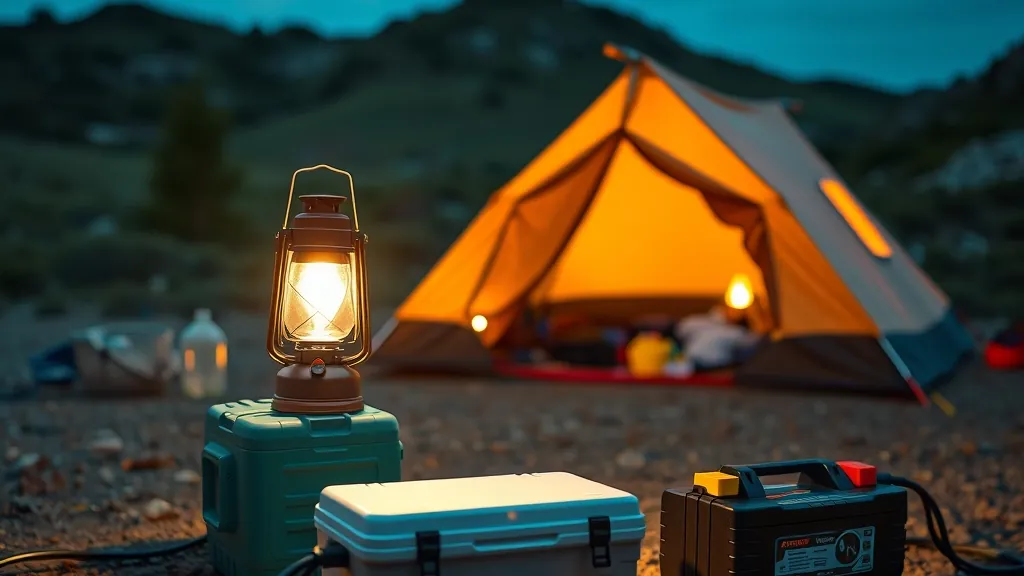
I’ve hauled enough gear into enough job sites and campsites to have a rule: the weight you’ll curse is the weight you carry from the car, not the weight on the spec sheet. A power station that sounds great at 1,000+Wh turns into a different product when you have to walk it 80 yards from the lot to a site, then keep it dry, shaded and ventilated for three nights.
So this ranking leans on the stuff camping actually punishes: weight, fan noise, how much solar you can feed it, and what the manual says about temperature. I did not run my own lab tests on these four. The ratings, weights and runtimes below come from the manufacturers’ published specs and the independent reviews already cited in our individual write-ups, and I’ve kept “rated” and “measured” separate where the sources do. Prices swing with sales and I haven’t pinned any here; check the live listing before you buy.

How we ranked them
All four are LiFePO4 stations in the roughly 1,000-1,150Wh range, so capacity is close to a wash. That let me weigh the things that actually differ:
- Carry weight. The spread is 23.8 lb to about 36 lb, which is the difference between one hand and a two-person lift.
- Solar input. Camping means recharging off panels. A higher input ceiling means a faster refill in good sun, but only if you own that many panels.
- Noise. Fans on a quiet site carry. We lean on the independent measurements where they exist.
- Outlets and expansion. Counting what you’ll really plug in matters more than a total watt number.
- Cold limits and warranty. Fall camping exposes charging temperature limits, and warranty terms depend on where you buy.
A safety note that applies to all four: none of these should be wired into a house panel or RV without a licensed electrician installing a proper transfer switch or inlet. Use them as stand-alone power sources, keep them dry and ventilated, and follow the manufacturer’s manual over anything here.
1. Anker SOLIX C1000 Gen 2: best all-rounder for car camping
Anker’s SOLIX C1000 Gen 2 is the one I’d carry. At 24.9 lb with a 1,024Wh pack and a 2,000W inverter (Anker’s rating), it’s the best mix of weight and muscle in this group. It also accepts up to 600W of solar input, which is the highest ceiling here, and Anker quotes a 49-minute full wall recharge, handy for topping off in the driveway the night before you leave.
The trade-offs are real. There’s no expansion port, so 1,024Wh is the ceiling forever, and the fans get loud under fast charging or heavy load; Notebookcheck measured roughly 45 dB at one meter. The original model’s built-in light bar is also gone, so pack a lantern. If you want the full breakdown, see our Anker SOLIX C1000 Gen 2 review.
2. Jackery Explorer 1000 v2: lightest to carry
Jackery lists the Explorer 1000 v2 at about 23.8 lb, the lightest unit here, with 1,070Wh and a 1,500W inverter. If your site is a haul from the parking spot, or you’re loading a canoe or a small truck bed, that matters more than almost any spec.
The costs show up at camp. There are only three AC outlets, solar tops out at 400W, and there’s no expansion port. Jackery’s fast one-hour charge needs the app’s emergency mode; standard wall charging runs about 1.7 hours. The warranty is three years plus a free two-year extension when you register and buy from an authorized seller, which is worth reading closely, since marketplace sellers may not qualify. Details in our Jackery Explorer 1000 v2 review.
3. EcoFlow DELTA 2: best for growing a setup, with a cold-weather caveat
The DELTA 2 is the oldest design here and is being replaced by the DELTA 3 series, which is exactly why it can be a bargain: EcoFlow sells remaining stock, and our review notes pricing near $400 in recent sales. I’d call it the pick for people who might want more capacity later, since it has an extra-battery port the Anker and Jackery lack. It also has six AC outlets, so a camp kitchen, lights and chargers won’t fight over plugs.
Two camping caveats. At roughly 27 lb it’s a two-hand carry, and EcoFlow rates charging only between 32F and 113F, so a cold garage or a frosty morning at a shoulder-season site can stop it from accepting a charge. Keep it inside the vehicle overnight. Availability of accessories will thin out as stock moves to the newer line. See the EcoFlow DELTA 2 review.
4. Bluetti AC180: good power, hard to love on the trail
The AC180 has four AC outlets, 1,800W continuous output, 500W of solar input and a five-year warranty per Bluetti’s listing, and independent testers measured roughly 950-1,030Wh usable at the outlets. On paper it competes. In a camp it loses on the one spec that decides a lot of trips: weight. At about 35-36 lb it’s a real lift, and OutdoorGearLab called the fan loud enough to list as a con. That’s a poor trade at a quiet site.
I’d choose it if the unit also lives in a garage as home backup and rarely leaves a flat spot near the car. It has compatible add-on batteries (Bluetti lists B80, B230 and B300) if you outgrow it. Read the full Bluetti AC180 review before buying.
Which one for which trip
- Walk-in sites and boats: Jackery. Every pound counts.
- Car camping with solar panels: Anker, for the higher solar ceiling and the quick wall recharge.
- A setup you plan to grow, or tight budget: EcoFlow, if you can live with the temperature limits.
- Stationary basecamp or home-and-camp dual use: Bluetti, for the outlet count and warranty.
What these four won’t do
None of them is a true online UPS, with switchover times of 10-30ms depending on the model, and none can heat a tent or run an electric space heater for long. Resistive heating loads drain a 1kWh pack in about an hour. Also, none of them are allowed on commercial flights at this size. Treat any runtime math as a starting estimate and measure your own gear with a plug-in watt meter, since actual draw almost always differs from nameplate numbers. Specs, prices and warranty terms change, so confirm them on the maker’s current page before you buy.