Most people shopping for a portable power station start with the biggest number on the box, and that’s usually the wrong number. A power station has two separate ratings that answer two separate questions, and sizing correctly means checking both against what you actually plan to plug in. I spent years in renovation and contracting, where “it should be enough” was the phrase before most callbacks. Here is the five-step method I use instead.
The two numbers you’re sizing for
Watts (W) is how much power the station can deliver at one moment. That’s the inverter’s continuous AC rating. It decides whether a device runs at all.
Watt-hours (Wh) is how much energy the battery holds. It decides how long things run.
A simple comparison: watts are the width of the pipe, watt-hours are the size of the tank. A wide pipe on a small tank empties fast. Everything below is about making sure the pipe is wide enough for your loads and the tank is big enough for your hours.
Step 1: List devices and find the real wattage
Write down every device you want to run. Then find its wattage on the rating label, usually on the back or on the power brick, or in the manual. If the label lists volts and amps instead, multiply them: 120V × 1.5A is 180W.
Be careful with the label itself. It often shows the maximum draw, not the average. A fridge label may show a number far above what it uses over a day, because the compressor cycles on and off. For anything with a motor or heating element, a plug-in watt meter is the honest answer. They’re inexpensive, and 24 hours on your actual fridge tells you more than any chart.
Some typical ranges, as rough planning figures only (check your own labels, because models differ a lot):
| Device | Typical running draw | Watch for |
|---|---|---|
| Phone charging | 5-20W | Easy. Rarely changes the answer. |
| Laptop | 45-100W | Gaming laptops run higher. |
| LED lights | 5-15W each | Add them up if you have many. |
| Wi-Fi router and modem | 10-25W | Runs 24 hours a day. |
| TV | 50-150W | Varies with screen size. |
| Full-size fridge | 100-150W averaged, higher at startup | Compressor surge, see step 3. |
| Electric kettle, toaster, hair dryer | 1,000-1,800W | Heating elements drain batteries quickly. |
| Space heater, window AC | 500-1,500W | The wrong job for most portable stations. |
These are ballpark planning ranges, not measurements of specific products. The label on your device wins.
Step 2: Turn watts into watt-hours
For each device: watts × hours of use = watt-hours. Then add them up.
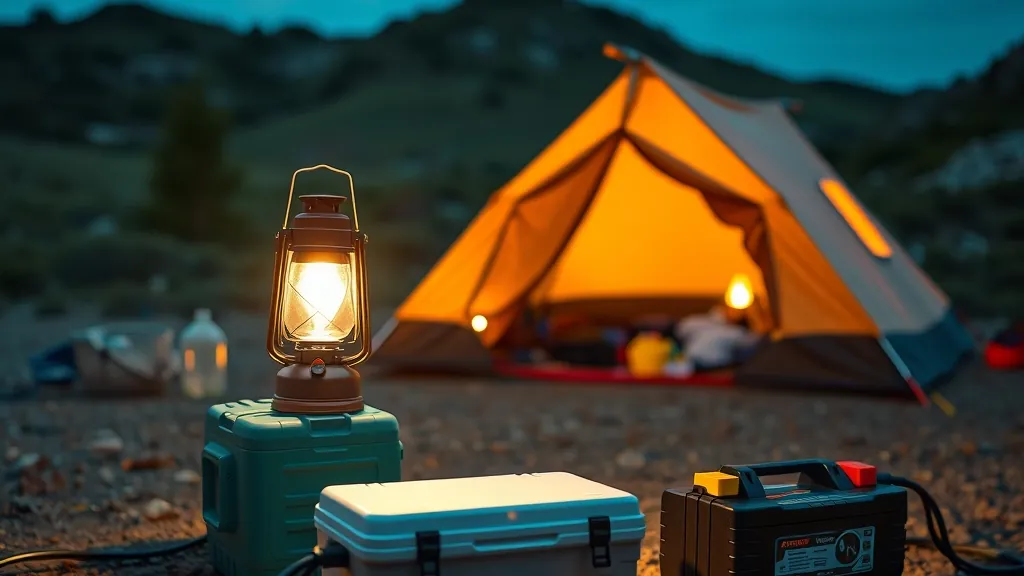
A weekend camping example with made-up but plausible numbers:
- Two LED lanterns, 10W each, 4 hours a night, 2 nights: 160Wh
- Phones and a tablet, about 60Wh in total
- A 60W laptop for 3 hours: 180Wh
- A small 12V cooler drawing an average of 40W over 24 hours for 2 days: 1,920Wh
That last line is the one that surprises people. A compressor cooler on a long weekend can use more energy than everything else combined. If you drop it from the list, the total is around 400Wh, which a much smaller and lighter station covers easily. Always figure out which one device dominates your total, because that decides whether you buy a 500Wh unit or a 1,500Wh unit.
Step 3: Check surge and total simultaneous load
Now go back to watts. Add up what could run at the same time, not across the day. If a 700W microwave and a 150W fridge might both be on, you need at least 850W of continuous output.
Then think about surge. Motors, compressors and some power tools draw several times their running wattage for a fraction of a second at startup. Most stations list a surge rating, often around double the continuous rating, and the manual should say how long it lasts. If a device’s starting draw goes over that surge number, the station will shut off to protect itself, even if the battery is full.
If the appliance label lists “locked rotor amps” or “starting watts,” use those. If it doesn’t, ask the manufacturer or leave extra margin. Sump pumps, well pumps and some air compressors are the classic traps. Equipment like that, especially anything wired into a house circuit, is where you call a licensed electrician before trying to back it up. Never plug a station into a wall outlet to feed the house through a cord.
Step 4: Add a margin for losses
Batteries don’t deliver 100% of their label capacity to an AC outlet. Converting battery DC power to household AC costs energy, and the inverter uses some power just by being on. A reasonable planning rule is to expect roughly 80-90% of rated capacity as usable AC energy, and less in cold weather. Independent tests in our individual reviews often land in that range.
So take your step 2 total and divide by about 0.8. If you need 1,000Wh of actual use, shop for a station rated around 1,250Wh or more. Cold nights and an aging battery eat into that, which is also why I like to add another 10-20% if you’ll use it in winter.
If a device can run directly from USB-C or a 12V port, it skips the inverter, which usually stretches your runtime. That is worth knowing for lights, fans and coolers.
Step 5: Match the number to a real station
Rough capacity bands, widely used in this category:
- Under about 300Wh: phones, lights, a laptop, maybe a CPAP using the maker’s DC cord. Light enough to carry in one hand.
- 500-1,000Wh: weekend camping, a small fridge or cooler, a router and lights during a short outage, a drill or two on a jobsite.
- 1,000-2,000Wh: the middle of the market, and where the most useful choices sit. This covers outage essentials such as a fridge, router and lamps for an evening or a night, or a camping setup with a compressor cooler and a laptop.
- Above 2,000Wh: long outages, RV use or powering several things at once. These get heavy and expensive, and many arrive with an expansion battery option.
Before you buy, check four details that the headline number hides:
- Continuous output, so it exceeds your simultaneous load from step 3.
- Surge rating, if you run motors.
- Recharge options and speed: wall, car, and solar input limits. A big battery that takes ten hours to refill from the wall may not suit repeated short outages.
- Weight, because capacity is heavy. A 1kWh unit is typically in the 20-35 lb range, and that matters if you carry it.
If you want examples of how real units stack up at around 1kWh, see our best portable power stations for camping and best solar generators for home backup. For a single model in depth, our EcoFlow DELTA 2 review is a good example of how to read a spec sheet against these steps. Specs and prices change often, so confirm on the maker’s current listing.
Two safety notes
Follow the manufacturer’s manual for operating and charging temperatures, ventilation and storage. Lithium batteries can be damaged or become a fire risk when charged outside their rated temperature range or left in a hot car. Keep stations dry and out of direct heat, and don’t cover the vents.
If anyone relies on powered medical equipment, talk to their provider about backup runtime before choosing a size, and ask your utility if it keeps a medical-priority list. A station is not a substitute for that plan. For anything that connects to your home’s wiring, such as a transfer switch or interlock, hire a licensed electrician.
A quick sizing recipe you can reuse
- List devices and read their labels (or measure with a watt meter).
- Multiply watts by hours for each, then add the results.
- Add up the loads that can run together and compare to continuous and surge ratings.
- Divide your watt-hour total by about 0.8.
- Choose the lightest station that clears both numbers with some margin.
That’s it. When the answer comes out much bigger than you expected, check which single appliance caused it. Dropping or replacing one heavy load, for example by using a cooler that runs from a lower-power source, often saves more money than buying a bigger battery.
How we wrote this: figures marked as typical are planning ranges, not lab measurements of specific products. We have not bench-tested the stations mentioned. Always confirm wattage, surge, capacity and warranty terms on the manufacturer’s current documentation, because they change.