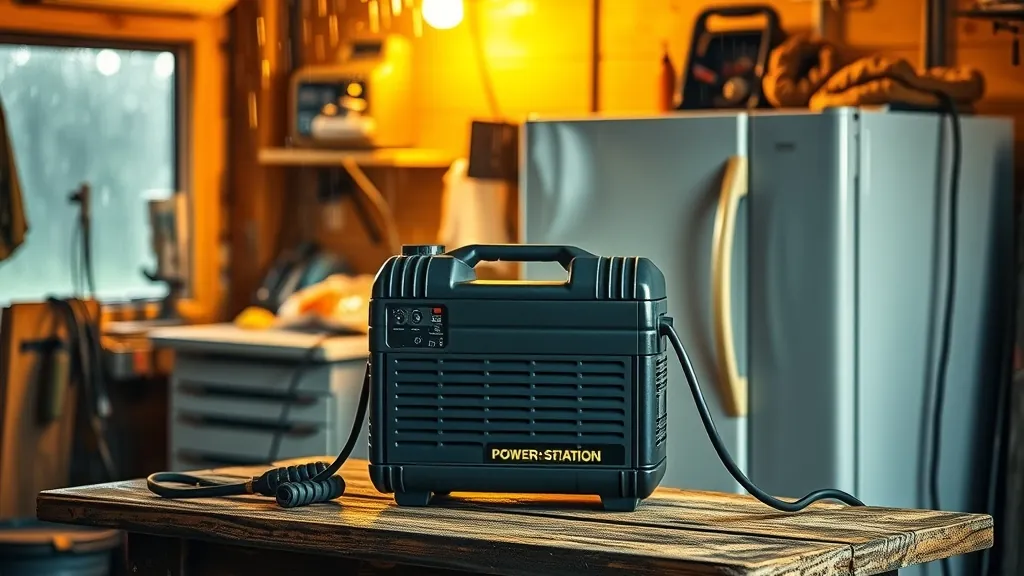
Bottom line: at the roughly $400 it has been selling for in 2026 sales, the EcoFlow DELTA 2 is the 1kWh power station I’d point most people toward for keeping a fridge, a router and some lights alive through a one-night outage. At its old list price it was merely fine. At clearance pricing it’s a good deal, as long as you know where it falls short. It is not a home backup system, it is not a computer UPS, and EcoFlow is moving on to the DELTA 3. If you can live with those three facts, it’s worth buying.
I spent years on renovation crews where “temporary power” meant a contractor generator chained to a porch post and a nest of 12-gauge cords. That background makes me look at a box like this in terms of upkeep. What does it ask of you between outages? How long until the battery is the problem? What does the warranty actually make the company do? Sticker price comes after those questions.
What you’re paying for, and what it costs now
Here are the numbers that matter. All of them come from EcoFlow’s own manual and product materials. They’re the manufacturer’s ratings, not my bench measurements.
| Spec | EcoFlow's rating | What it means in practice |
|---|---|---|
| Capacity | 1,024Wh, LiFePO4 (LFP) | Expect roughly 850–900Wh usable at the AC outlets after inverter losses |
| AC output | 1,800W continuous, 2,700W surge, 6 outlets (120V) | Runs a full-size fridge, a window AC on low, a circular saw for short cuts |
| X-Boost | Up to 2,200W | For heating-element loads only (kettle, hair dryer); it lowers voltage, so don't use it on motors or electronics |
| AC charging | 1,200W max; EcoFlow quotes 0–80% in ~50 min | The standout feature, covered below |
| Solar input | 500W max, 11–60V, 15A | Two or three portable panels, wired with voltage in mind |
| USB | 2× USB-C (100W each), 4× USB-A (2 at 12W, 2 at 18W) | Laptop charging without the inverter running |
| Car / DC | 12.6V 10A car outlet; 2× DC5521 | CPAP-friendly 12V output on the car socket |
| Cycle life | 3,000 cycles to 80%+ capacity | Daily cycling for about eight years before you hit 80% |
| EPS switchover | Within 30ms | Fine for a router; not a true UPS |
| Weight / size | ~27 lb (12 kg); 15.7 × 8.3 × 11.1 in | Fits on a garage shelf; a two-hand carry |
| Warranty | 5 years (EcoFlow's stated term) | Read the storage section of the manual, below |
On price: EcoFlow’s own flash sale had the DELTA 2 at $399 in February 2026, and other spring 2026 listings showed the same figure. That’s a big drop from where it launched. When I checked EcoFlow’s US store on October 6, 2026, the DELTA 2 product link redirected to the newer DELTA 3. The DELTA 3 was listed at $599 on sale ($699 regular) and marked sold out. Prices on this category swing by $100 or more around holiday sales, so treat any number here as a snapshot, not a quote.
The gap matters for the decision. The DELTA 3 has the same 1,024Wh capacity and adds faster 1,500W AC charging, a 4,000-cycle rating, and a higher surge spec. Those are real improvements. But if the DELTA 2 is $150–$200 cheaper when you’re shopping, most people backing up a kitchen during storm season won’t notice the difference.
The feature that justifies the verdict: an hour from the wall
Most reviews lead with the capacity. To me, the AC charging speed is what makes this unit work in a real outage.
Here’s the pattern I’ve seen through a lot of storm seasons. The power doesn’t go out once for three days. It goes out for six hours, comes back for forty minutes, drops again overnight, and flickers on the next afternoon. A power station that needs eight hours on the wall, like a lot of older units did, never gets back to full in those short windows. The DELTA 2’s 1,200W X-Stream input means a forty-minute window of grid power can put most of the battery back. EcoFlow’s claim is 0–80% in roughly 50 minutes. The last 20% always charges slower on lithium packs, so plan on closer to an hour and a half for a true full charge.
It also means you can top it off from a gas generator for a short run instead of letting the generator idle all night. That saves fuel and lets you sleep. Run the generator outside and well away from windows and doors; carbon monoxide is the real danger in outages, not the battery. Also check that your generator puts out clean enough power. Some small open-frame units don’t, and the station may refuse to charge from them.
Where the charging story falls short is solar. The 500W input is fine, but the 60V ceiling means you have to pay attention to how you wire panels. Two 200W portable panels in series usually fit inside the window. Three often won’t, depending on their open-circuit voltage. Check the panel’s Voc on its label, add it up, and keep the total under 60V with some margin, because Voc rises in cold weather. That’s a two-minute math job, but it’s the kind of thing the sales page doesn’t mention.
Doing the honest runtime math
I won’t give you runtime numbers I didn’t measure. Instead, here’s how to work out your own, and it’s the same math I’d do on a job site.
Start with roughly 870Wh usable. That’s 1,024Wh minus about 15% for inverter and conversion losses, which is a typical figure for this class of unit. Then divide by your load’s average draw, not its label rating:
- Refrigerator: a modern full-size fridge cycles on and off, so its average over 24 hours is often 100–150W even though the compressor pulls more when running. That works out to somewhere around 6–9 hours. Keep the door shut and you’ll be at the better end of that.
- Router + modem: often 15–25W combined. On the USB-C or DC outputs, without the inverter running, that’s well over a day.
- CPAP: run it off the 12V car socket with the manufacturer’s DC cord and skip the heated humidifier if you can. Draw varies a lot by machine and pressure setting, so check your machine’s manual or measure it.
- Window AC unit: it’ll start one, but even a small unit pulling 500W averages out to under two hours. This isn’t the tool for cooling a house.
The best $20 you’ll spend on this purchase is a plug-in watt meter. Run your fridge through it for a full day before storm season. I’ve had clients absolutely sure their old garage fridge was “efficient” until the meter said otherwise.
Limitations worth knowing before you buy
It isn’t a UPS. EcoFlow’s manual says the switchover happens within 30ms and tells you directly not to connect anything that needs 0ms switching, like data servers and workstations. Your router will probably ride through. A desktop PC may well reboot. If you need true uninterruptible power for a computer, buy a real UPS.
It doesn’t connect to your house wiring by itself. People ask me about this more than anything else. A power station runs things that are plugged into it. Feeding your home’s circuits takes a transfer switch or an interlock with a power inlet, and that’s a job for a licensed electrician with a permit in most places. It’s not a weekend project. Never use a double-male “suicide cord” to backfeed a dryer outlet. It can electrocute a utility worker down the line and can start a fire in your own walls. If whole-circuit backup is the goal, budget the electrician’s time into the comparison, and look at units EcoFlow designs for its home-panel products instead.
Storage takes some upkeep. This part doesn’t make it into the ads. EcoFlow’s manual asks you to cycle the battery every three months if it sits unused: discharge to 0%, recharge to full, then run it down to about 60% for storage. It also ties long idle periods to warranty coverage, so read that section before you shelve it in a closet for a year. Store it between 68°F and 86°F if you can. The rated storage range is 14°F to 113°F, and charging is only rated from 32°F to 113°F. An uninsulated garage in Minnesota in January or Arizona in July is a bad home for it. Put a quarterly reminder on your phone. That ten-minute job is the whole maintenance plan.
It’s being phased out. As the DELTA 3 takes over, expect fewer DELTA 2 accessories on store shelves over time. If you want to grow capacity, the expansion question is worth settling now. The DELTA 2 has one extra-battery port. EcoFlow pairs it with the DELTA 2 Extra Battery (about 2kWh total) or the bigger DELTA Max Extra Battery (around 3kWh total). If you think you’ll want more capacity in the next year or two, buy the extra battery while it’s still easy to find new.
Safety basics. Give it airflow on all sides when it’s running hard, since the fans need room. Keep it dry and off a wet garage floor. Don’t take it on a plane. And don’t block the vents with the cords you’ve plugged in, which is the most common mistake I see. LiFePO4 is the more thermally stable lithium chemistry, which is part of why I’m comfortable with it in a house, but it’s still a large battery, so treat it like one. As far as I could find, the DELTA 2 has not been recalled. The CPSC recall EcoFlow issued in 2025 covered the DELTA Max 2000, a different model. If you’re buying used, check the model on the label.
Who it’s for, and who should skip it
Buy it if: you want a fridge, internet and lights running through a typical storm-season outage, you camp or tailgate a few times a year, or you want a quiet power source for a job site without dragging a generator. At around $400, it’s hard to find LFP chemistry, a 5-year stated warranty and one-hour wall charging for less.
Skip it if: you need to power hardwired loads like a well pump or furnace blower. That’s a transfer-switch-and-electrician job, and the unit needs to be sized for it. Also skip it if you need true UPS behavior for a workstation, if the unit will live somewhere that regularly drops below freezing, or if a newer DELTA 3 is within about $100 when you shop. At that gap, take the newer model for the extra cycle rating and faster charging.
How I evaluated it: this review is based on EcoFlow’s published manual and specifications, current listings checked on October 6, 2026, and the CPSC recall database. Runtime figures are calculated estimates using stated assumptions, not measured results. Specs, prices and availability change, so confirm against EcoFlow’s current listing before buying.