Say you’ve already decided a 1kWh battery box beats a gas generator for your situation. Maybe it’s a fridge and a router through storm-season outages, maybe it’s a weekend at a campsite without hookups, maybe it’s running a miter saw at the far end of a property where nobody ran an outdoor outlet. You’ve narrowed it to the obvious names, and one of them is the Jackery Explorer 1000. That name now covers several different machines, so the first job is making sure we’re talking about the same one.
This review covers the Explorer 1000 v2 (model JE-1000D), the version Jackery currently sells under the 1000 name. It is not the original Explorer 1000, which used a 1,002Wh lithium-ion NMC pack, and it is not the Explorer 1000 Plus, a bigger, heavier unit that takes expansion batteries. Older original-1000 stock still shows up on marketplaces, sometimes at prices that look like a steal. Check the listing for “v2” and “LiFePO4” before you pay.
How it stacks up against what you’re probably cross-shopping
The realistic alternative most people weigh against the 1000 v2 is a 1kWh EcoFlow, and I covered the EcoFlow DELTA 2 yesterday, so I’ll use it as the reference point. Figures below are manufacturer ratings unless I say otherwise.
| Jackery Explorer 1000 v2 | EcoFlow DELTA 2 | |
|---|---|---|
| Capacity / chemistry | 1,070Wh, LiFePO4 | 1,024Wh, LiFePO4 |
| Rated cycle life | 4,000 cycles to 70% | 3,000 cycles to 80% |
| AC output | 1,500W continuous, 3,000W surge | 1,800W continuous, 2,700W surge |
| AC outlets | 3 | 6 |
| USB | 2× USB-C (one 100W, one 30W per the manual), 1× USB-A 18W | 2× USB-C 100W, 4× USB-A |
| Wall charging | ~1 hr in app emergency mode; ~1.7 hr standard | 0–80% in ~50 min |
| Solar input | 400W max (two 8mm DC ports) | 500W max |
| Expansion battery | None | One extra-battery port |
| UPS / EPS switchover | ≤20ms | ≤30ms |
| Weight | ~23.8 lb (Jackery); 24.4 lb measured by OutdoorGearLab | ~27 lb |
| Warranty | 3 years + free 2-year extension | 5 years |
Read that table and the trade is pretty plain. The Jackery is the smaller, lighter box with the longer-rated battery and the faster UPS switchover. The EcoFlow has twice the outlets, more solar headroom, and a way to grow. Neither is better across the board. Which one wins depends on whether you’re carrying it or parking it.
On price, Jackery’s fall 2026 promotion listed the 1000 v2 at $499, down from $559, and deal posts over the past year have shown it lower than that at times through Amazon and other retailers. Best Buy has carried it with a $799 original price, which tells you how loose “regular price” is in this category. Treat every number as a snapshot. Prices on power stations move by $100 or more around Prime Day and Black Friday.
Where it earns its keep: size and weight
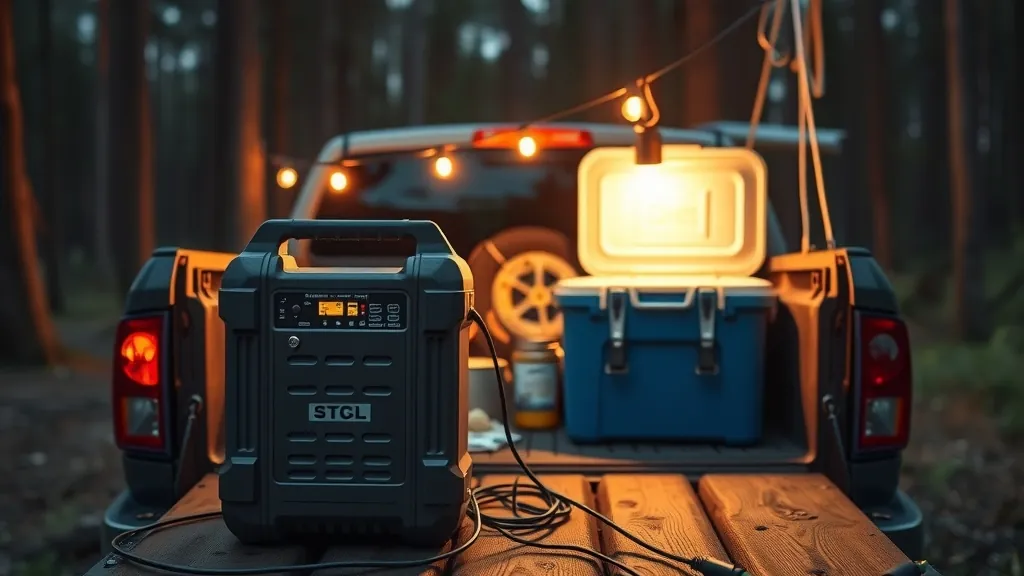
I’ve hauled a lot of equipment up a lot of basement stairs, and the thing that decides whether a tool gets used is usually how annoying it is to move. At roughly 24 pounds with a fold-flat handle, the 1000 v2 is the first 1kWh unit I’d call a one-hand carry for most adults. The handle folds down, so you can set a cooler or a tool bag on top in a truck bed, which you can’t do with units that have fixed handles at both ends.
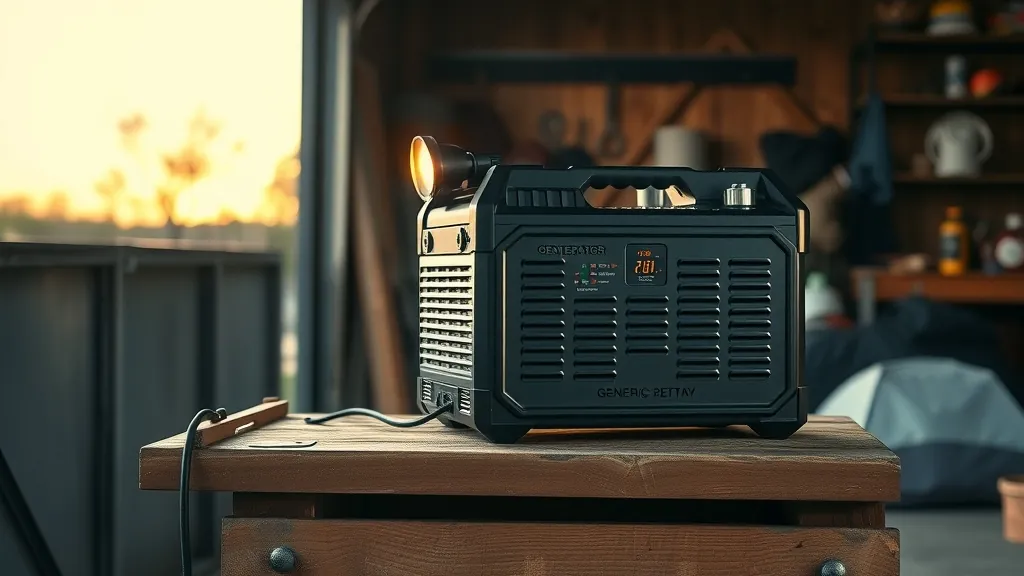
The footprint is about 12.9 by 8.8 inches. That matters more at home than at camp. It fits on a standard 12-inch-deep garage shelf with room for the cord. It slides under a desk next to a router. The DELTA 2 is about 15.7 inches long and won’t go on that same shelf.
If the unit is going to live in a closet and only come out twice a year, none of this matters much. If it’s going to ride in a truck to job sites or get carried to a tent pad a few times a month, it matters a lot.
Where it pinches: three outlets and a fixed tank
Here’s the complaint I’d have every single outage. Three AC outlets is not enough for a house. Fridge, chest freezer, and one lamp, and you’re done. Plug in a power strip and you can get more devices running, but now you’re stacking loads on one outlet and watching the 1,500W limit yourself. Use a strip with its own breaker, keep it off the floor, and don’t daisy-chain strips.
One correction to how this unit gets described. Several roundups list both USB-C ports at 100W. Jackery’s user manual lists one at 100W and one at 30W. A single laptop charges fine. Two hungry laptops at once won’t both get full speed.
The bigger long-term issue is that 1,070Wh is the ceiling. There’s no expansion battery port. Plenty of people buy a 1kWh station for camping, then go through one long outage and wish they had three times the capacity. With the DELTA 2 or Jackery’s own 1000 Plus, you’d buy an add-on battery. With the 1000 v2, you’d buy a second station. Decide which kind of buyer you are now, not after the first ice storm.
The charging story, with the fine print
Jackery advertises one-hour charging, and it’s true with a catch. The one-hour figure needs the app’s emergency charge mode. Standard mode runs about 1.7 hours. OutdoorGearLab timed a full charge at around 1.6 hours in their testing and called it slower than some competitors. For anyone who’s lived through on-again, off-again outages, either number is fine. A 40-minute window of grid power gets a big chunk of the battery back.
What I don’t love is putting a basic function behind an app. Phones die, apps update, Bluetooth pairing fails at exactly the wrong moment. The standard charge works without any of that, so this isn’t a dealbreaker. Just set up the app and test emergency mode on a calm day instead of learning it by flashlight.
Solar is the weaker side. Jackery’s manual lists two 8mm DC inputs, a 12–60V range, and a combined maximum of 400W. That’s enough for a pair of 200W portable panels, and retailer spec sheets quote about 3.8 hours as the best-case solar recharge. Real-world input almost always lands below the panel label because of sun angle, heat and shading. If off-grid solar is the main way you’ll charge, the 400W ceiling is a real limit. Watch the panel open-circuit voltage on the label too, since Voc rises in cold weather and you need to stay under 60V.
Real runtime, not brochure runtime
OutdoorGearLab measured about 910Wh of usable output from the 1,070Wh pack, roughly 85%. That’s typical once inverter losses are counted, and it’s the number I’d plan around. Divide it by your load’s average draw:
- Full-size fridge averaging 100–150W across a day: roughly 6–9 hours.
- Router plus modem around 20W: well over a day, longer if you run them from USB-C or the car port and skip the inverter.
- CPAP: use the 12V car port and the manufacturer’s DC cord, and skip the heated humidifier if your doctor says that’s fine. Draws vary a lot by machine and pressure setting, so measure or check the manual.
- Circular saw or miter saw: the 3,000W surge rating handles the startup kick of most 15A saws, and a few dozen cuts barely dent the battery. A table saw running all afternoon is a different story.
A $20 plug-in watt meter on your fridge for a full day is still the best money you’ll spend on this purchase. Every client who swore their garage beer fridge “barely uses anything” was wrong.
Warranty, upkeep and the safety lines I won’t blur
Warranty. Jackery lists a 3-year standard warranty plus a free 2-year extension, five years total, for units bought from Jackery or authorized sellers. That’s competitive, but read the registration requirements at checkout. Marketplace third-party sellers and open-box units may not qualify. Keep the receipt with the unit, not in a drawer somewhere else.
Storage upkeep. Like any lithium power station, it shouldn’t sit at 0% or 100% for months. Check the charge every few months, top it up, and store it partly charged somewhere that stays near room temperature. Jackery’s manual has the exact intervals and temperature ranges; follow those, not a forum post. A shelf in a conditioned basement beats an uninsulated garage in January or July.
It’s not a home backup system by itself. The 1000 v2 runs what’s plugged into it. Feeding your home’s circuits takes a transfer switch or an interlock with a power inlet, installed by a licensed electrician, with a permit in most places. Never backfeed a dryer or wall outlet with a double-male cord. It can electrocute a lineworker and start a fire inside your walls.
The UPS isn’t a true UPS. The ≤20ms switchover is quicker than many rivals and keeps a router alive. A desktop or NAS may still reboot. Buy a dedicated UPS for those.
Basic battery safety. Give it airflow while it’s working, keep it off wet floors, and don’t fly with it. LiFePO4 is the more thermally stable lithium chemistry, which is part of why I’m comfortable keeping one indoors, but it’s still a big battery. When I checked on October 7, 2026, I found no CPSC recall covering the Explorer 1000 v2. If you buy used, check the model name on the label and search the CPSC site yourself, since recall status can change.
Verdict: pick it for portability, skip it for whole-house plans
Buy the Explorer 1000 v2 if you’ll actually carry it: camping, tailgating, job sites, or moving it from a closet to the kitchen a few times a year. The size, weight, 4,000-cycle rating and up-to-five-year warranty make a lot of sense at around $500 or less.
Skip it if you want a stationary home backup you can grow. Three outlets, a 400W solar limit and no expansion port add up to a unit that outgrows a household fast. For that job, a station with an extra-battery port, or a properly installed inlet and transfer switch with a larger system, is the better path.
How I evaluated it: this review is based on Jackery’s published specs and user manual for model JE-1000D, Jackery’s product listing and fall 2026 sale pricing, OutdoorGearLab’s published test results for usable capacity and charge time, and a CPSC recall search on October 7, 2026. Runtime figures are calculated estimates from stated assumptions, not my own bench tests. Specs, prices and warranty terms change, so confirm against Jackery’s current listing before buying.