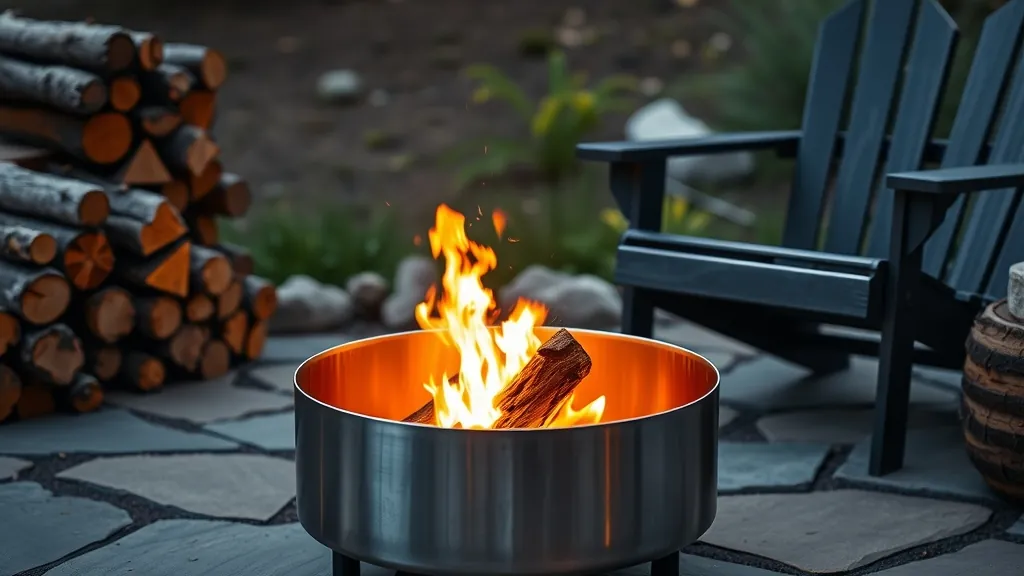
The short version: the Solo Stove Bonfire 2.0 is a good fire pit for two to five people on a patio, and it does what the marketing says about smoke, as long as your wood is dry and the fire is hot. It isn’t a heater, it burns through firewood faster than a steel ring in the ground, and it costs a good deal more than a plain fire bowl. I’d give it 4.1 out of 5. Buy it on sale, buy it for the smoke and the cleanup, and don’t buy it expecting it to warm a ten-person circle in November.
How I put this together: I haven’t run a Bonfire 2.0 through a season, and I’m not going to pretend I have. Measured weight, burn time, temperature and smoke scores come from OutdoorGearLab’s side-by-side fire pit test. The list of what’s in the box and the clearance guidance come from Mark Wolfe’s hands-on review at Bob Vila. Prices come from retailer listings I checked in October 2026. Warranty and patina language comes from Solo Stove’s own wording as quoted on retailer listings, because Solo Stove’s site blocked my fetch. I also searched for recalls and found none as of October 2026. Where a number is a rating rather than something a tester measured, I say so.
What it actually costs
The sticker price is the start of the conversation, not the end of it. Here’s what I found in October 2026 listings for the fire pit with the stand, which is the 2.0 kit most people buy:
| Where | Listed price | Notes |
|---|---|---|
| Home Depot (SSBON-2.0) | $259.99 | Price data valid to mid-October 2026 |
| Solo Stove (Bonfire + Stand 2.0) | $269.99 sale / $299.99 regular | Page may be cached; check before buying |
| Scheels | $349.99 | Same kit |
| Solo Stove Essential Bundle (pit, lid, stand) | $379.99 | Adds the lid |
| Solo Stove Backyard Bundle | $579.99 | Adds several accessories |
That’s a $90 spread on the same fire pit. Solo Stove runs sales often enough that I wouldn’t pay the high end. OutdoorGearLab’s 2024 test listed it at $350, so the price has come down since then.
The real long-term cost is firewood. Bob Vila’s reviewer called out that it burns more wood, faster, than an open campfire, because the double wall is built to feed the fire with oxygen the whole time. OutdoorGearLab got about an hour from three medium logs. If you’re buying bundled firewood at a grocery store, that adds up over a season much faster than the fire pit itself. If you have a wood source, or you’re splitting your own, it matters less.
Then there are the add-ons you’ll be offered at checkout: the lid, the shelter (a cover), the shield (a spark screen) and the heat deflector. Of those, I’d actually buy two:
- A cover or shelter. Stainless is rust resistant, not rust proof. Solo Stove’s own wording says prolonged moisture can increase staining and rusting. Leaving it open in the rain all season is the fastest way to a brown ash pan.
- A spark screen, if you burn near anything that can catch: a wood deck, dry grass, a fence. Pine and other soft woods pop.
The heat deflector is the one I’d hold off on until you know you need it. More on that below.
The feature that justifies it: how it handles smoke
Everything about this fire pit hangs on one design trick, so it’s worth understanding before you spend the money. The Bonfire is a double-walled steel drum. Air comes in through holes at the bottom, gets heated as it rises between the two walls, and comes out through a row of holes near the top rim. That hot air reignites the smoke coming off the logs before it leaves the pit. When it’s working, what you see is flame and heat shimmer, not a gray column chasing you around the circle.
Does it work? The testing says yes, with conditions:
- OutdoorGearLab scored it 9.0 out of 10 for smoke management, its best mark in the group, and said it produced visibly less smoke than every other pit in the test, even when they burned wet, unseasoned wood.
- Home & Gardens’ reviewer saw almost no smoke, apart from a bit of white smoke from the embers as the fire burned down.
- Popular Science said the airflow makes it easy to light and “all but eliminates” smoke.
Now the conditions. The secondary burn only runs when the pit is hot, so the first 10 minutes after lighting and the last half hour of coals will smoke like any fire. Wet wood makes that window longer. And a few owner reviews on retail sites complain of serious smoke. From the way this design works, the usual culprits are green wood, or a pit stuffed above the top air holes, which smothers the secondary burn. Keep the logs below the rim of the holes. That’s the one usage rule that makes the difference.
The limitations, plainly
It heats up more than out. This is the complaint that shows up in nearly every honest review. OutdoorGearLab scored heat output 8 out of 10 and measured temperatures up to about 1,000°F inside the pit. Their downside note, though, was that it “does not disperse heat outwards” as much as they wanted. The enclosed walls and raised stand send most of the heat straight up. Sit close and you’re warm. Sit eight feet back on a cold night and you mostly get to watch the fire. Solo Stove sells a heat deflector that sits on top and pushes heat sideways. If you know you’ll use it in cold weather, budget for it. If you mostly light it on summer evenings, you won’t miss it.
It’s not big. At 19.5 inches across and 14 inches tall without the stand, it’s sized for three to five people. Solo Stove makes the larger Yukon if you regularly have a crowd. With the Bonfire, a group of eight ends up as an inner ring and an outer ring.
The steel changes color. After the first hot fire, the top rim goes bronze, gold and blue. Solo Stove calls this patina and says it’s normal, and its warranty doesn’t cover cosmetic heat discoloration. If you want it to look like the catalog photo forever, you’ll be disappointed by the second weekend. It doesn’t affect how it burns.
The stand is not a license to burn anywhere. The stand lifts the base off the surface and is meant to protect decks, grass and concrete from heat. Some owners still report marks on decking. If you’re on a wood or composite deck, read the manual’s surface instructions first, and check your HOA rules and your deck manufacturer’s guidance. A cheap fire-resistant mat under the stand is cheap insurance.
Setup, upkeep and the time it really takes
There’s no assembly. Lift it out of the box, drop the fire base and flame ring in, set it on the stand. OutdoorGearLab timed setup at under a minute. Total weight measured 21.2 lb; other listings say 22 to 25 lb depending on whether the stand is counted. One person can carry it, but there are no handles. You grab the rim, which is a reason to let it cool all the way down before you move it. Count on several hours after a real fire.
Placement. Bob Vila’s review cites about 6 feet of clearance from walls and fences and at least 15 feet of overhead clearance. That rules out burning under most covered patios, pergolas and low tree limbs. Follow the clearance figures in your manual over any review, and check whether your town allows recreational fires and whether a burn ban is in effect. It’s an outdoor appliance only. Never use it in a garage, tent or enclosed porch, because carbon monoxide can build up.
Cleanup. This is the real upgrade in the 2.0. On the original Bonfire, you emptied ash by turning the whole pit upside down and shaking it. Ask anyone who’s done that on a windy day. The 2.0 has a removable fire base and an ash pan: once everything is completely cold, lift the base, lift the pan, dump it, put it back. My routine would be:
- After each fire: wait until it’s cold the next morning. Put the ash in a metal can with a lid, not a paper bag or plastic trash bin, because ash that looks dead can still hold live embers for a day or more.
- Every few fires: wipe the inside walls and check the bottom air holes aren’t clogged with ash, since blocked holes are what kill the smoke reduction.
- Before winter: clean it, dry it, cover it or store it in a dry garage.
Gloves help. Bob Vila’s reviewer noted your hands get dirty emptying it, which tracks.
The warranty fine print
Solo Stove advertises a lifetime warranty on its stainless fire pits against manufacturing and material defects, with replacement at Solo Stove’s option. That’s longer than most fire bowls. But read what it doesn’t cover:
- Discoloration. Heat patina is expected and excluded.
- Normal wear and misuse. Bent rims from dropping it hot, damage from overloading it, and anything that looks like abuse will likely be refused.
- Rust from moisture. Solo Stove’s own wording describes the pits as rust resistant, not rust proof, and warns about prolonged moisture. Read that as: a cover is effectively a maintenance requirement if you want a clean claim later.
Keep the receipt or order confirmation. Buy from Solo Stove or a recognizable retailer, because a “lifetime” warranty only matters if you can prove where you got it. I couldn’t load Solo Stove’s own warranty page during this review, so check the current terms there before you rely on any of this.
How it compares to the obvious alternatives
- A $50–$100 steel fire bowl or ring: much cheaper, throws heat in every direction, and smokes a lot more. If smoke doesn’t bother you or your neighbors, it’s honestly the better value.
- Breeo X Series: another double-wall smokeless design. Bob Vila’s reviewer cited a $349 starting price for the X19. It’s heavier and built around cooking accessories. If you want to grill over your fire pit, look there.
- A propane fire table: no wood, no ash, instant on and off, and often permitted where wood fires aren’t. But there’s no real wood fire, and you’re dealing with tanks.
Who it’s for, and who should skip it
Buy it if: you have a small patio or yard, you burn a few times a month, your neighbors (or your own eyes) are sick of smoke, and you’re willing to buy dry, seasoned wood.
Skip it if: you mostly want warmth on cold nights for a big group, you burn wood you didn’t season yourself, you’re on a budget that would rather put $200 toward firewood, or your fire rules only allow gas.
For a two-to-five-person patio fire with dry wood, the Bonfire 2.0 is easy to live with. The included stand and the lift-out ash pan fixed the two things I’d have complained about on the original. Pay sale price, budget for a cover, keep the logs below the top holes, and it’ll do what it promises.