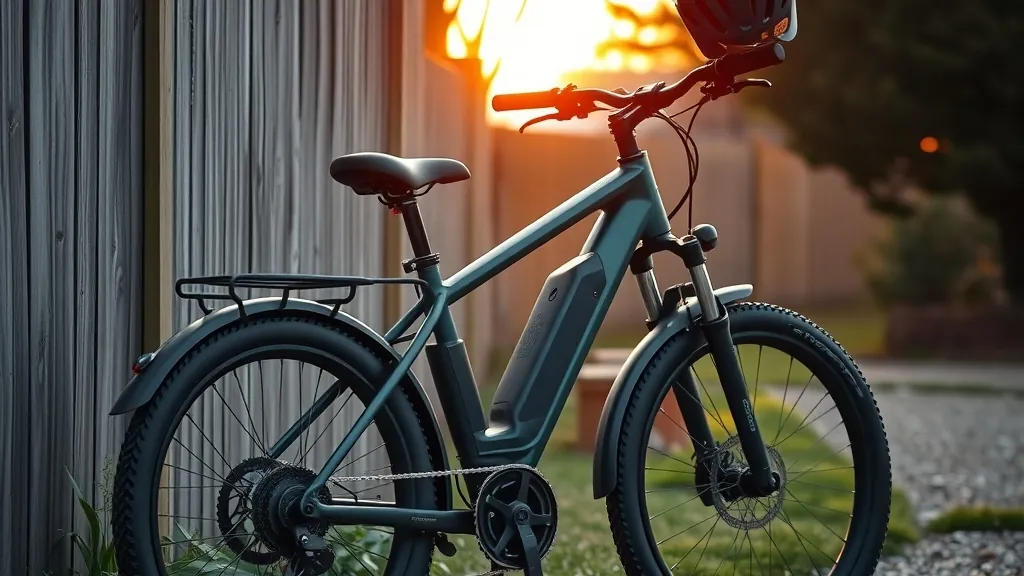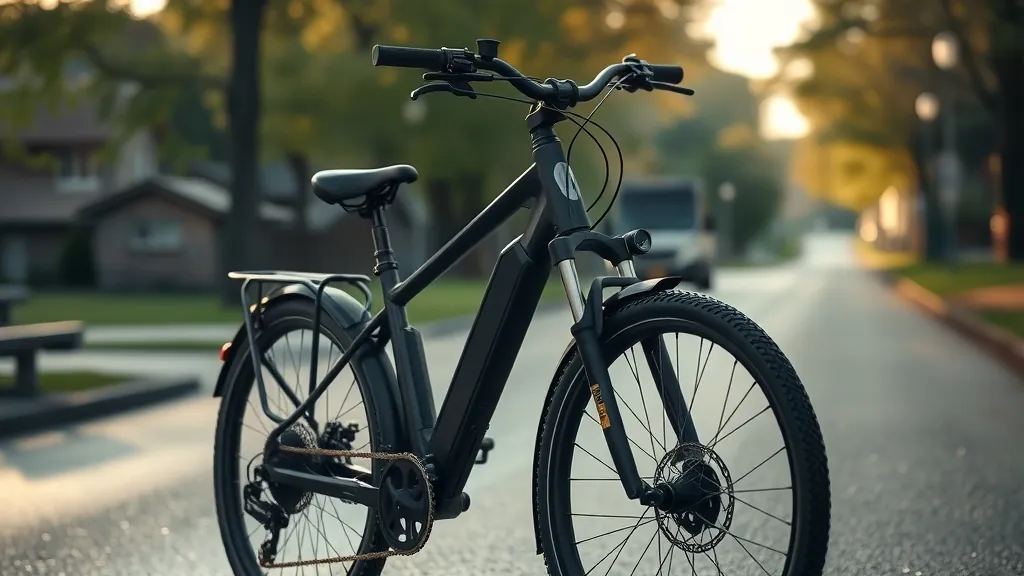
Here’s the problem the 700 Series solves. You’ve got a 9-to-12-mile commute on suburban roads with real car traffic. A Class 2 bike that tops out at 20 mph feels like you’re holding up the lane on every stretch without a bike lane. The bikes that hold 28 mph and come with decent hydraulic brakes have mostly sat at $2,000 and up. Below that, you find cable discs, no-name derailleurs and batteries with no certification you can look up.
The Ride1Up 700 Series has been one of the few bikes in the gap for years. It has a 750W geared hub that holds Class 3 speed, Tektro hydraulic brakes, Shimano gearing, a 100mm lockout fork, and a rack and fenders. It has historically sold for about $1,295 to $1,695 depending on the sale. My rating is 4.0 out of 5. It’s fast and well-equipped for the money. It loses points for a cadence sensor that feels a beat behind your pedaling, modest torque on steep hills, a harder-than-average build, and a warranty that’s thin once the first 30 days pass.
How I put this together: I haven’t put a season of commuting on a 700 Series, so I’m not quoting range from my own rides. Specs come from Ride1Up’s product page and support pages, checked November 19, 2026. Measured numbers come from Electric Bike Report (range at two assist levels and a hill test) and OutdoorGearLab (throttle-only range, weight, acceleration). I searched for CPSC recalls and found none involving Ride1Up. Where a number is Ride1Up’s rating rather than a measured result, I say so.
The short version
If your rides are mostly flat or rolling pavement and speed matters more to you than a silky pedal feel, the 700 Series is still one of the better-equipped Class 3 commuters you can buy for around $1,500. If you live somewhere properly steep, want natural torque-sensor assist, or don’t want to do a real assembly job, spend your money elsewhere.
What you’re actually buying
| Spec | Ride1Up 700 Series (manufacturer listing) |
|---|---|
| Price | Not shown on Ride1Up’s page in Nov 2026; historically $1,495 at launch, $1,595–$1,695 list, sales as low as about $1,295–$1,395 |
| Classes / speed | Class 2–3; throttle to 20 mph, pedal assist to 28 mph |
| Motor | 48V geared hub, 750W sustained, about 60 Nm torque (per Electric Bike Report); 48V 18A sine-wave controller |
| Battery | 48V 15Ah, 39 Samsung 21700 cells, UL 2271 (about 720Wh). Ride1Up’s FAQ and earlier reviews list 14Ah (672Wh), so early units differ |
| Claimed range | 30–50 miles |
| Sensor | Cadence |
| Brakes | Tektro dual-piston hydraulic, 180mm rotors, motor cut-off sensors |
| Drivetrain | Shimano Acera 8-speed, 45T chainring, 11–30T cassette |
| Fork | Mozo hydraulic lockout, 100mm travel |
| Tires | Schwalbe Super Moto-X, 27.5 x 2.4 in |
| Weight / limits | 62 lb claimed; 300 lb total; 50 lb rear rack |
| Frames | Step-over and step-through |
The battery line needs a note. Ride1Up’s current spec list says 15Ah, while the FAQ on the same page says the largest pack that fits is 14Ah. Electric Bike Report tested a 672Wh (14Ah) bike and OutdoorGearLab a 720Wh one. Ask Ride1Up which pack ships with the bike you’re ordering. It’s a 7% capacity difference, so it matters for range planning but isn’t a deal-breaker either way.
The standout: speed and range that hold up
Ride1Up’s whole pitch is fast and far for the money, so that’s the claim I checked hardest.
Speed. Electric Bike Report found the motor holds its Class 3 speed on flat ground. OutdoorGearLab timed 0–20 mph on the throttle at 13 seconds. That isn’t a drag-race number, but it’s quick enough to get out of an intersection ahead of turning traffic. On a suburban commute, the 28 mph pedal-assist ceiling is the real benefit. You can ride with the flow of slower traffic instead of being passed by every car.
Range, rated vs. measured:
- Electric Bike Report, PAS 1: about 45.1 miles to a dead battery (672Wh pack).
- Electric Bike Report, PAS 5: about 27.6 miles.
- OutdoorGearLab, throttle only: 32.4 miles on a route with 1,726 feet of climbing, averaging 17.2 mph (720Wh pack).
So Ride1Up’s 30–50-mile claim is honest, with a caveat: if you ride at the top assist level to hold 28 mph, plan on the high 20s. For a 10-mile each-way commute at full speed, that’s a charge every night, or every other night if you dial assist down on the way home. Cold weather will cut that further. A lithium pack loses range below about 40°F and shouldn’t be charged below freezing, so bring it inside.
Where it falls short
The cadence sensor. A cadence sensor turns the motor on once the cranks start turning and delivers a fixed level of power for each assist setting, whatever your effort. Electric Bike Report called the 700 Series’ response slightly laggy when you start and stop pedaling. In practice you get a half-beat surge after you start pedaling and a half-beat of push after you stop. On a 28 mph bike, that lag matters when you’re feathering through a crowded intersection. Use the brake levers, which have motor cut-off sensors, rather than relying on the pedals to stop the assist.
Bikes like the Velotric Discover 2 and Aventon Aventure.3 use torque sensors, which add power in proportion to how hard you push. If you’ve ridden both types, you know the difference on the first block. The 700 Series’ answer is price.
Steep hills. About 60 Nm of torque is modest for a 62 lb bike. In Electric Bike Report’s hill test (about a third of a mile at an average grade over 12%), the bike cleared the top at PAS 5, averaging 11.8 mph. On throttle alone it didn’t make it. OutdoorGearLab’s hill was gentler, and the bike held 14–16 mph. Translation: rolling hills are fine and short steep ramps are fine if you pedal and downshift. If your daily route has a long 10%+ grade, test-ride one or look at a bike with more torque.
Weight. 62 lb claimed, 63 lb 11 oz as OutdoorGearLab weighed it. Lighter than a fat-tire bike, but too heavy for daily stairs, and over the per-bike rating on many hitch racks. Pull the battery before you lift it.
Load limit. The 300 lb total limit includes you, your bag and anything on the 50 lb rack. That’s lower than some competitors (Velotric lists 440 lb for the Discover 2), so heavier riders hauling groceries should do the math.
Assembly: plan an afternoon, or pay a shop
This is the part sales pages skip, and it’s where my renovation background makes me picky. OutdoorGearLab gave assembly its lowest subscore, and Electric Bike Report said the build is more involved than typical direct-to-consumer bikes and recommended a shop build.
Expect to fit the handlebar and stem, front wheel, pedals, fenders and possibly the rack and lights. Then adjust the brakes and derailleur so nothing rubs. Tools: metric Allen keys, a 15mm pedal wrench, and a torque wrench so the stem and handlebar bolts end up at spec rather than “tight enough.” Set aside two to three hours if you’ve built bikes before. If you’ve never centered a hydraulic caliper or indexed a derailleur, budget for a local shop’s assembly fee. That fee isn’t in Ride1Up’s price, so factor it into the real cost.
One more reason to have a shop look at it: Ride1Up’s warranty asks you to report defective components within 3 working days of delivery. You want the bike built and test-ridden that first week, not sitting in its box until the weekend after next.
Warranty and return fine print
Ride1Up’s online terms, as I read them in November 2026:
- Length: 1 year against manufacturing defects. Listed components include the controller, display, sensor, battery and motor.
- Labor: covered only in the first 30 days, and only if you contact Ride1Up before work is done. After that, Ride1Up ships replacement parts free within the year and you pay for installation.
- Where: bikes bought and ridden in the contiguous US. Hawaii and Alaska shipping is listed at $600, and Canada starts at $100.
- In-store purchases: a separate Ride1Up policy lists a 6-month warranty, parts only. Ask which applies before you buy.
- Returns: 30 days, bike undamaged and under 20 miles on the odometer. You pay return shipping, and Ride1Up’s support pages list a restocking fee ($250–$350, depending on which page you read). Batteries, accessories and replacement parts aren’t returnable.
Compare that with the 2-year electrical coverage Aventon and Velotric offer. A year is short for a bike whose battery is the most expensive part to replace, and the 30-day labor window means a motor failure in month eight is a parts-plus-shop-bill job. That’s the main reason this bike scores 4.0 instead of higher.
Safety and the rules
Charge only with the supplied charger, on a hard surface away from anything flammable. Don’t charge a pack that’s been dropped hard, is swollen or smells odd, and don’t leave it charging unattended overnight in a room where people sleep. Over winter, store the battery partly charged somewhere cool and dry, not on a freezing garage floor. The pack’s UL 2271 listing is a real plus, but it doesn’t replace sensible charging habits.
Check the brakes and pads more often than you would on a regular bike. A 62 lb bike at 28 mph puts much more energy into the rotors. Re-check bolt torque after the first 50–100 miles, when cables stretch and parts settle.
E-bike classes, helmet laws, age limits and path access vary by state and city. Many multi-use paths allow Class 1 and 2 but not Class 3. Set the 700 Series to the class that’s legal where you ride.
Who should buy it, and who should skip it
Buy it if your commute is flat or rolling pavement, you want to keep up with traffic at 28 mph, and you can build a bike or have a shop that will. It also makes sense if you can find it at or near its historical $1,300–$1,400 sale price.
Skip it if you want torque-sensor assist, your route includes long steep grades, you weigh close to the 300 lb limit with cargo, or you’d rather pay more for a 2-year warranty than save a few hundred dollars now.
Verdict
The 700 Series earns its 4.0 on speed, honest range and name-brand parts at a price that undercuts most Class 3 commuters. Two independent testers got range inside or near Ride1Up’s claim, and the hydraulic brakes and Shimano drivetrain are parts any shop can service. It’s held back by a laggy cadence sensor, middling torque on steep hills, a fussy build, and a 1-year warranty with only 30 days of labor coverage.
If it fits your route, buy direct from Ride1Up. Build it or have it built the week it arrives, and report anything wrong within the 3-day window. Confirm the price, battery size and warranty terms on the listing before you check out, because all three have changed over this bike’s run.