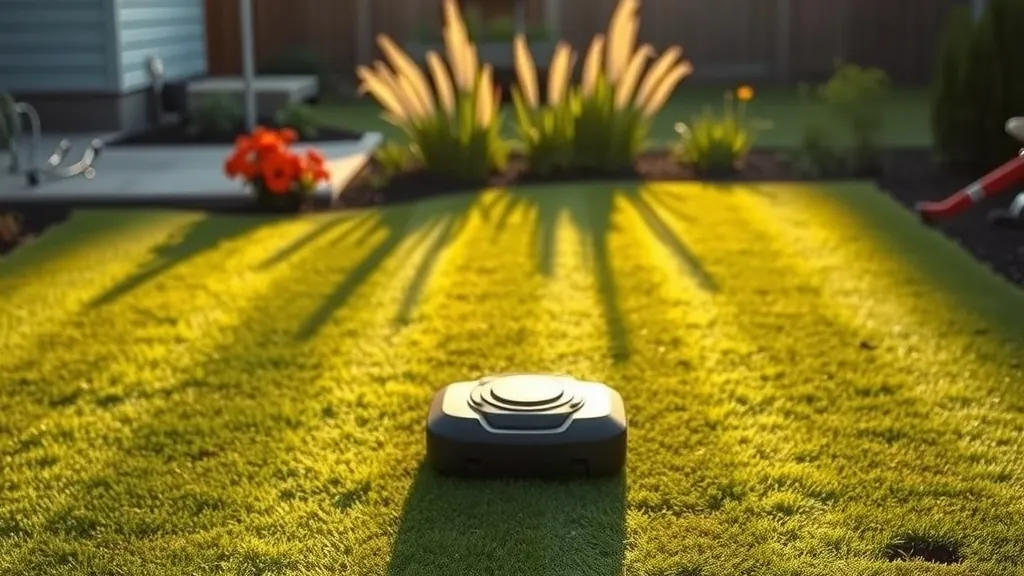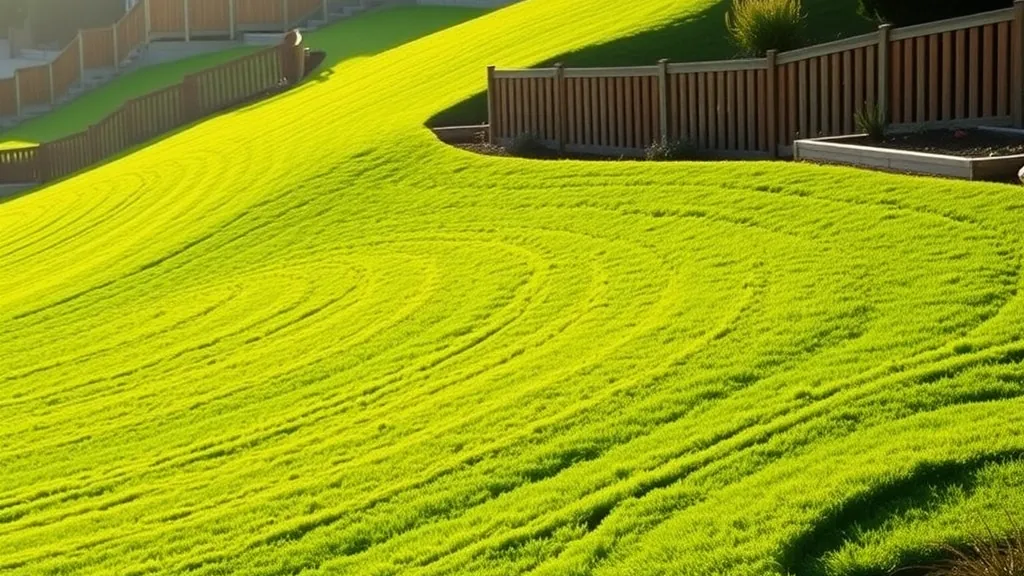
Here’s the yard this mower is built for: a quarter-acre or so of grass behind a house on a hillside, with a bank that drops off toward the fence. You’ve been mowing that bank with a push mower held sideways, or paying someone, because a string trimmer takes forever and a riding mower is out of the question. Most small robot mowers are rated for slopes of 24° to 45%, which won’t touch that bank. The Mammotion LUBA mini 2 AWD is rated for 80% (38.6°). That one number is the reason to look at it, and it’s also why it costs nearly two thousand dollars.
If your lawn is flat, this probably isn’t your mower. If it isn’t, keep reading. I’d give it 4.0 out of 5.
How I put this together: I haven’t run a LUBA mini through a season on my own lawn, and I won’t pretend otherwise. Specs and prices come from Mammotion’s US store and warranty page, Best Buy’s US listings, and hands-on reviews from Techaeris (the 1500H) and Notebookcheck (the EU 1000), all checked in November 2026. I searched for a CPSC recall and didn’t find one listed for the LUBA mini. Where a number is a manufacturer rating rather than something an independent tester measured, I say so.
First, figure out which “LUBA mini” you’re looking at
This is the part that trips people up, and it matters more than any spec sheet. Three different machines are sold under nearly the same name:
| Original LUBA mini AWD | LUBA mini 2 AWD 1500 / 1500H (US) | LUBA mini 2 AWD 1000 (EU/UK) | |
|---|---|---|---|
| Navigation | Camera vision + RTK satellite positioning | 360° LiDAR + dual cameras | Three cameras + network RTK, no LiDAR |
| Base station / antenna | Early kits shipped with an RTK reference station; later Mammotion moved it to NetRTK | None needed | None needed |
| Edge-trimming disc | No | Yes | Yes |
| Rated area | 800 or 1,500 m² versions | 1,500 m² (0.37 acre) | 1,000 m² |
| Price seen | Best Buy listed the 1500 at $1,999; some versions now sold out | $1,999 list, $1,799 on sale at Mammotion US (Nov 2026) | €1,499 RRP |
Prices and availability are what I saw in November 2026, and they change with every seasonal sale. Some original LUBA mini AWD versions show as sold out on Mammotion’s US store, while marketplace sellers still list them, sometimes with names that blur into the mini 2.
The practical takeaway: in the US, the current model is the mini 2 AWD 1500 (main deck 0.8–2.6 inches) or 1500H (2.2–4.0 inches). The “H” is the one most American lawns want. Cool-season grasses like tall fescue do better cut at 3 inches or more in summer, and the standard version can’t go that high. Read the model number on the listing twice before you pay.
The rest of this review focuses on the US 1500H.
How it compares to the mower you were probably also considering
If you’ve been shopping small robot mowers, the other name on your list is likely the Segway Navimow i2 AWD, which I reviewed last week. Here’s how the two differ in ways that matter on a real lot:
- Slopes. The Navimow i2 is rated for 24° (45%). The LUBA mini 2 is rated for 38.6° (80%) inside the mowing area. Mammotion’s own spec drops to about 40% (21.8°) at the boundary edge, where the mower turns along the line, so a steep bank that runs right up to a fence is harder than the headline suggests. Notebookcheck’s tester got the EU 1000 up roughly a 70% ramp before it threw a “tipped” error. That was the mower’s tilt sensor tripping, not the wheels slipping. Treat 80% as a ceiling for dry grass, not a promise.
- Navigation under trees. The Navimow i2 depends on satellite signal. The US LUBA mini 2 maps with LiDAR, which Techaeris lists at roughly 200 feet of range, plus cameras, so heavy tree cover or a narrow side yard between two houses is less of a problem. The LiDAR dome sits on top of the mower, though, and the reviewer noted it needs clearance from low branches and can get scratched by shrubs and fence rails.
- Price. The Navimow i210 was $1,099 on sale when I checked. The LUBA mini 2 is $1,799 on sale. You’re paying roughly $700 more for the climbing ability, the LiDAR and the edge disc.
- Cut height. Navimow tops out at 3.6 inches. The 1500H goes to 4.0 and adjusts electronically from the app instead of with a knob under the deck.
If your lawn is flat and has decent sky overhead, the Navimow is the better value. If you have a bank, shade, or both, the extra money buys something real.
The edge disc: useful, with one catch
The feature that sets the mini 2 apart from its predecessor is a second, smaller cutting disc on the right side. The main deck is 200 mm (7.8 in) wide. The edge disc is 120 mm (4.7 in), offset so it can reach to about 2.1 inches from a wall, according to Mammotion.
I’ve done enough yard cleanup to know the trimming is what eats a Saturday, not the mowing. Anything that shrinks the strip you have to go back over with a string trimmer is worth having. Reviewers agree it helps. They also agree on its limitations:
- The height is fixed. On the 1500H, the edge disc sits around 65 mm (about 2.6 in) per Techaeris’s spec table, though the same review’s text describes it as roughly two inches. Notebookcheck measured the EU 1000’s edge disc at a fixed 50 mm. Either way, if you mow the main lawn at 3.5–4 inches, the borders come out shorter. On a fescue lawn in July, that strip can brown before the rest does.
- It won’t cut flush. 2.1 inches from a foundation is still 2.1 inches. You’ll still trim along the house, around posts and in tight inside corners.
- Obstacle avoidance can fight it. Notebookcheck found the mower sometimes steered away from overhanging plants, which defeats the point of edging. Others found the edge disc clipping plants that hang over the lawn. Expect to adjust your boundaries and no-go zones for a few weeks.
So it reduces trimming. It doesn’t remove it.
Setup and the learning curve
Hardware assembly is quick. Techaeris put it at under fifteen minutes. With no antenna or reference station to mount on the US version, the charging station is the only fixed install. Pick a level spot at the lawn’s edge, near an outlet, where sprinklers won’t spray directly onto it.
Power is the part I’d pay attention to. Plug the station into a GFCI-protected outdoor outlet with a weatherproof in-use cover. If you don’t have one near the lawn, have a licensed electrician add a circuit or outlet. Don’t run an indoor extension cord through a window or under a door. I’ve seen too many of those get pinched, and a mower that runs in the rain is not where you want a cheap cord.
Mapping takes longer than assembly. You can let the mower build a 3D map automatically or drive it around the edge by remote. Then you set zones (up to 20), no-go areas and mowing patterns: straight lines, grids or custom stripes. Both hands-on reviewers say the app is capable but has a learning curve. Budget an afternoon for the first mapping, and a few short sessions afterward to fix the corners it gets wrong.
Daily life with it
Runtime. It uses a 6.1 Ah battery. Mammotion quotes about 150 minutes of mowing per charge and about 150 minutes to recharge. Techaeris saw 2–3 hours in moderate grass and closer to 90 minutes under heavy load. The mower heads back to the dock at 15% and resumes at 80%. Summer heat can slow charging, so a July lawn will take longer to get through than a May one.
Noise. Techaeris lists an A-weighted figure of about 56 dB, and Notebookcheck measured about 55 dB at one meter on the EU model. That’s quiet enough to run early on a weekday without bothering the neighbors.
Weather. The mower and station are rated IPX6, which means they handle rain and water jets. That isn’t permission to pressure-wash it. The app also supports rain delays.
Connectivity. Bluetooth, Wi-Fi and 4G. The 4G connection supports remote control and live camera streaming from the app. In April 2026 Mammotion said its iNavi network RTK service and the 4G data it uses would be free for life on compatible mowers. Other 4G features may only be included for a set period on some models and regions, though, and Mammotion’s own EU guide still describes a paid plan after a complimentary period. Before you buy, check what your model and region actually include. I don’t like recurring fees showing up after the return window closes.
Upkeep and safety
- Clean the underside. Techaeris found wet clippings packing up under the decks and around the wheels. Brush it out every week or two in peak season, following the manual’s limits on water.
- Blades are consumables. Mammotion’s warranty excludes cutting blades, cutting discs, tires and charging cables as wear parts, with free replacement only if they’re defective within 30 days. Budget for blade swaps every season. Always power the mower off and wear gloves before touching the decks.
- Watch your turf on turns. One owner on sandy Bahia grass in Florida reported the mower’s tank-style turns tearing thin, shaded edges. They remapped to keep it off those strips. Soft soil and wet banks will show wheel marks, especially with the wide rear tires Notebookcheck noted.
- Keep kids and pets inside while it runs. Camera and LiDAR obstacle detection is a backup, not a guarantee. Do a walk for toys, hoses and sticks before scheduled runs, and follow the manual’s safety instructions.
- Battery care. It’s a lithium pack. Store it the way Mammotion’s winter guidance says, bring the mower indoors for the off-season, and don’t charge it if the pack looks damaged or swollen.
- No handle. Notebookcheck noted the 15 kg EU model has no carry handle. Lifting it over a garden edge or into a shed is awkward. Lift with your legs.
The warranty fine print
Mammotion’s US warranty page lists 3 years on the battery for the LUBA mini 2 AWD series and names the motor, LiDAR vision module, circuit board and charging station as covered parts, but it doesn’t clearly state the term for each one. Best Buy’s listing for the mini 2 AWD 1500 shows 3 years parts and labor. If the warranty matters to you, and on a $2,000 machine with a lot of electronics it should, get the term in writing from the seller you’re buying from, register the mower when it arrives, and keep the receipt. Wear parts are excluded, as noted above.
Who should skip it
- Flat, open lawns. You’d be paying for climbing ability you’ll never use. A cheaper wire-free robot covers the same ground.
- Lots bigger than about a third of an acre. The 0.37-acre rating is a best case. Mammotion’s larger LUBA models exist for bigger yards.
- Anyone who wants zero trimming. The edge disc helps, but you’ll still run a trimmer along the house and fences.
- People who don’t want to fiddle with an app. It rewards time spent setting zones and patterns. If you want plug-and-forget, expect some frustration in the first month.
Verdict
The LUBA mini 2 AWD earns its 4.0 by doing something few small robots attempt: it handles a genuinely steep small yard without a wire, an antenna or a base station. The 1500H’s 4-inch maximum cut height and the edge disc make it a better fit for American lawns than the original mini. It loses points for the price, an edge disc stuck at one height, a steep app learning curve, and a product name shared by three different machines.
If you have a sloped lawn under about a third of an acre, the 1500H bought on sale is the version I’d buy. Confirm the model number, the current price and the warranty terms on the listing before checking out, since all three change.