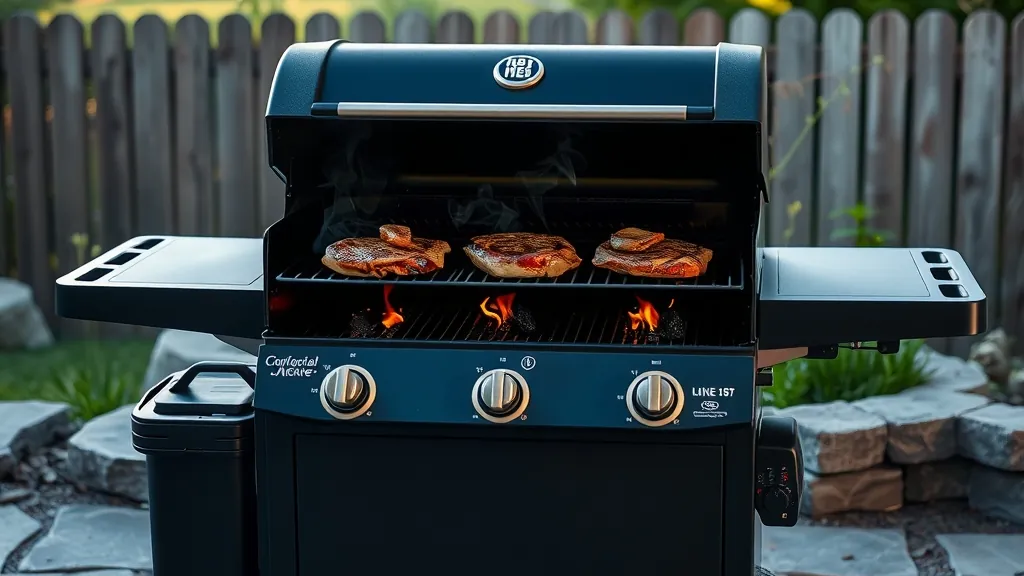
The short version: the Weber Genesis is the gas grill I’d point most people to if they want to buy one grill and not think about it again for ten years. The E-325 is the one to buy, because for roughly $50 more than the E-315 you get a 13,000 BTU sear burner. That’s the feature that makes a three-burner grill cook a steak properly instead of just browning it. I’d only step up to the four-burner E-415 if you regularly cook for more than eight people.
What keeps it from a higher score is money and fine print. A Genesis costs around twice as much as a decent big-box three-burner, and the “12-year warranty” in the marketing applies to the cookbox and lid, not to the whole grill. The parts most likely to fail on any gas grill, like the igniter and the knobs, sit in a 5-year bucket. The paint gets 2.
How I put this together: I haven’t had a current-generation Genesis on my own patio for a full season, so I’m not going to pretend I have. Specs and prices come from Weber’s U.S. Genesis listings and authorized retailers (Abt in particular) as of October 2026. Temperature data comes from a published lab-style test by BBQGuys on the previous E-325s, and I say so wherever I use it. Warranty terms come from the published warranty breakdown on retailer listings. Prices on grills move constantly and the model names change most years, so check the current listing before you buy.
What you actually pay
Here’s what the current lineup costs at listed prices. Sales around Memorial Day and Father’s Day often take $100–$200 off.
| Model | Burners | Main BTU | Sear burner | Primary / total area | Listed price (LP) |
|---|---|---|---|---|---|
| Genesis E-315 | 3 | 39,000 | No | 513 / 640.5 sq in | ~$899 (Abt); Weber lists NG at $949 |
| Genesis E-325 | 3 | 39,000 | 13,000 BTU | 513 / 641 sq in | ~$949 (Abt) |
| Genesis EX-325W Smart | 3 | — | Yes | — | $999 (Weber) |
| Genesis E-415 | 4 | 48,000 | No | 646 / 994 sq in | $1,299 (Weber) |
| Genesis S-415 (stainless) | 4 | — | No | — | $1,399 (Weber) |
Dashes are figures I couldn’t confirm from Weber or a retailer spec sheet, so I’ve left them blank rather than guess.
The sticker price isn’t the whole bill. Expect to add:
- A fitted cover. Check Weber’s current accessory price for your model. You’ll want one if the grill lives outside year-round, because the paint warranty is short.
- A propane tank, if you don’t already have one. Check the listing, but plan on supplying your own.
- A tank gauge or a bathroom scale. The standard Genesis models don’t list a fuel gauge, and at least one E-315 owner called that out as the grill’s only drawback. A full 20 lb tank weighs about 37 lb, so a scale works fine.
- Replacement Flavorizer bars and grates down the road. They’re warrantied against rust-through, but not against normal wear. If you grill three nights a week, budget to replace them sometime in the grill’s life.
If you’re running natural gas, the real extra cost is the gas line. That’s a job for a licensed plumber or gas fitter, usually with a permit and a pressure test. Depending on how far the patio is from your meter, it can cost more than the grill. It’s a good upgrade (no more running out of propane mid-cook), but get it quoted before you decide to buy the NG version.
The sear burner is what makes the price worth it
Most people buy a three-burner gas grill and find the same thing: it does burgers and chicken thighs fine, then turns a good ribeye gray. Three 13,000 BTU burners spread across 513 square inches don’t put enough heat into one spot.
The E-325’s 13,000 BTU sear burner is there to fix that, and it’s the reason it’s my pick over the E-315. Abt’s spec page lists the sear burner at 13,000 BTU, which matches Weber’s Canadian product page. A couple of smaller retailers list 9,000 BTU, so if a listing shows a different number, Weber’s spec sheet is the one to trust.
The best measured data I found is from BBQGuys’ test of the previous E-325s, which used a similar three-burner-plus-sear layout. With every burner including the sear burner on high for 15 minutes, the grates averaged 581°F. Without the sear burner it was 512°F. That’s a real gain, but look at where the heat ends up. The rear-center probe read 95°F below average with the sear burner on. The heat concentrates where the sear burner sits and drops off toward the back.
In practice, that means:
- Sear over the sear zone, then move the meat to a cooler main-burner zone to finish. That’s how the grill is meant to be used. Trying to sear across the whole grate at once won’t work.
- On low, the same test held about 354°F after 30 minutes. That’s fine for chicken pieces and ribs wrapped in foil, but it isn’t a smoker. Reviewers have also reported that holding a steady 300°F for indirect roasting takes more fiddling with the knobs than they expected.
That’s a fair result for a gas grill in this price range. It’s not a reason to pay for a Summit. Just don’t expect an even 600°F edge to edge across the grate.
What you’re paying for: the warranty, read properly
Weber’s marketing says “12-year limited warranty.” Here’s what that covers, according to the warranty breakdown published on retailer listings:
| Component | Coverage | Covers |
|---|---|---|
| Cookbox and lid assembly | 12 years | Rust-through, burn-through |
| Stainless burner tubes, cooking grates, Flavorizer bars | 10 years | Rust-through, burn-through |
| All other parts | 5 years | Defects in materials/workmanship |
| Paint | 2 years | Excludes fading or discoloration |
A few things in there matter more than the headline number.
“Rust-through” is a high bar. Surface rust, flaking porcelain and a grate that’s lost its coating but still has no hole in it are all normal wear. In my experience with any warranty that says “rust-through,” the claim gets judged on whether there’s a hole. Take photos once a season so you have a record if a claim ever comes up.
Five years is the number that really matters. On the grills I’ve seen fail, it’s almost never the cookbox. It’s the igniter, a cracked knob, a corroded manifold connection or a sagging side table, and those fall under “all other parts.” Weber’s real advantage isn’t the length of the warranty. It’s that you can still buy a Genesis igniter module or burner set five or eight years later, and in my experience that’s often not true of store-brand grills.
It’s for the original purchaser. Buying used gets you no coverage. Register the grill with Weber the day you assemble it, and keep the receipt as a photo in your email, because receipts in a kitchen drawer fade.
As with any warranty, confirm the exact terms in the owner’s manual for your specific model before you count on them. Weber has changed warranty wording between generations before.
Assembly and setup: budget an afternoon
The E-325 weighs about 162 lb assembled and ships in a 26 × 30 × 35 inch box at around 164 lb. That’s not a box you carry around the side of the house alone. Get it off the truck on a dolly.
From a renovation background, here’s my honest estimate. Assembly takes two to four hours with two people, and the step where you need the second person is lifting the cookbox onto the cart. If Weber offers app-based 3D instructions for your model, use them alongside the paper manual; they’re easier to follow on the fiddly hardware steps. Bring:
- A cordless drill/driver on a low clutch setting with a magnetic bit. Don’t overtighten into the frame.
- A 10 mm socket or nut driver, or whatever the hardware list in your manual specifies.
- A spray bottle of soapy water for the leak test.
Do the leak test. Before you light it for the first time, with the burners off and the tank valve open, spray soapy water on the regulator, hose and every connection. Growing bubbles mean a leak. Shut off the tank and fix it before you go any further. The manual tells you to do this, and it’s the one step people skip.
Mind the clearances. Weber’s manual gives minimum distances from combustible walls, siding and overhangs. Follow those numbers, not what looks fine. A gas grill under a vinyl soffit or a covered wood patio roof is how siding melts and patio fires start. If your only spot is under a roof, read the manual’s specific guidance first.
Once it’s set up, the overall dimensions are 57.7 inches wide (with side tables) by 27 inches deep, and 63 inches tall with the lid open. Measure your patio with the lid-open height in mind if there’s a pergola or umbrella overhead.
Upkeep: what a year of ownership looks like
Gas grills aren’t high-maintenance, but this is the routine that gets the 10–12-year life out of one:
- Every cook: preheat 10–15 minutes, then brush the grates. Cast iron grates hold heat well, but they rust if you leave them wet.
- Every few cooks: empty the pull-out grease tray and drip pan. A full grease tray is the most common cause of a grease fire on any gas grill.
- Twice a season: pull the Flavorizer bars and scrape the inside of the cookbox down into the grease tray. Check the burner ports for spider webs. Spiders like the venturi tubes, and a blocked tube can cause a flashback.
- End of season: clean thoroughly, re-oil the cast iron grates lightly, and cover the grill. If you store it in a garage or shed, the propane tank stays outside, never indoors.
Expect to replace grates or Flavorizer bars at least once over the grill’s life if you grill often. That’s normal wear, and the parts are easy to find.
Who should skip it
- Occasional grillers. If you cook outside ten times a summer, you won’t wear out a cheaper grill fast enough for the Genesis’s longevity to pay off. A Weber Spirit, or a well-reviewed $400–$500 three-burner, makes more financial sense.
- People who want true low-and-slow. It holds around 350°F on low, but it isn’t a smoker or a pellet grill. If brisket and pork shoulder are the point, look at a pellet grill or kamado instead.
- Renters who move every couple of years. A 162 lb grill you can’t fit in a car, with a warranty that only covers the original purchaser, is a bad match for frequent moves.
- Anyone who wants a griddle. Retailer specs for the E-325 list no griddle, so if that’s the goal, look at a dedicated flat-top.
Who it’s right for
You cook outside two or three times a week from spring to fall. You care more about a grill lasting than about the extra $400 up front. And you’re the kind of person who’ll actually empty the grease tray. For that buyer, the Genesis E-325 is the one to get: three main burners, a real sear zone, cast iron grates, and a cookbox that should still be going when the kids are learning to drive. Go up to the E-415 only if you regularly cook for a crowd and need the extra 133 square inches of primary grate.
If you’d rather run natural gas, buy the NG version from the start, and have a licensed gas fitter run the line. Don’t do that part yourself.