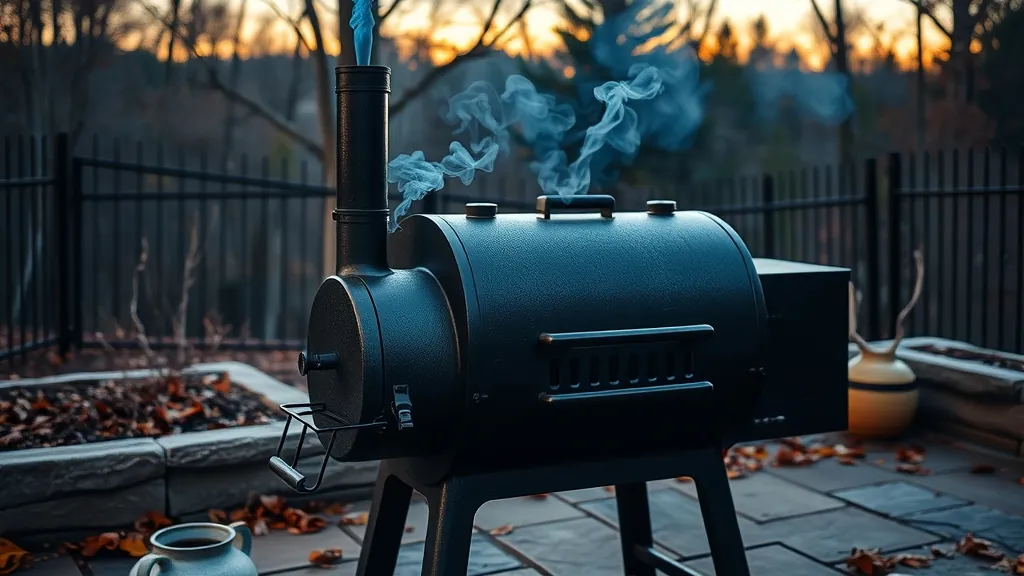
Most people who end up looking at an Ironwood already own a pellet grill. Usually it’s a cheaper one, a big-box Pit Boss or an older Traeger Pro, and there’s a specific complaint behind the upgrade. In November the grill can’t hold 225°F. A 12-hour brisket ran out of pellets at 3 a.m. Or the smoke flavor was so faint the family asked whether you’d just used the oven.
If that’s you, the Ironwood is aimed squarely at those problems. If you’re buying your first pellet grill, though, I’d slow down, because the cheaper Woodridge line does most of what this grill does, with more grate space.
How I put this together: I haven’t run a current Ironwood through a full season on my own patio, and I’m not going to write as if I had. Prices, specs and features come from Traeger’s US Ironwood and Woodridge product pages as of October 2026. Warranty terms come from Traeger’s US service-warranty page. Hands-on observations come from SmokedBBQSource’s long-term Ironwood XL review (updated October 2025), and I attribute them where I use them. Grill prices change often and Traeger runs frequent sales, so check the listing before you buy.
Ironwood vs. the two grills it’s usually compared with
Traeger’s lineup is a ladder, and the Ironwood sits in the middle. Here’s what each step costs at Traeger’s current list prices:
| Model | List price | Cooking area | Hopper | What you get over the step below |
|---|---|---|---|---|
| Woodridge | $899.99 | 860 sq in | 24 lb | Entry WiFIRE grill |
| Woodridge Pro | $1,149.99 | 970 sq in | 24 lb | Adds Super Smoke |
| Ironwood | $1,799.99 | 616 sq in | 22 lb | Dual-wall build, pellet sensor, touchscreen, 10-yr warranty |
| Ironwood XL | $1,999.99 | 924 sq in | 22 lb* | More grate space, same feature set |
| Timberline | $3,499.99 | 880 sq in | 22 lb | Induction side burner, stainless grates, wireless probes |
*Traeger lists 22 lb for the standard Ironwood and says the XL shares its features. One retailer listing shows 24 lb for the XL, so check the spec sheet for the unit you’re buying.
The surprising line is the second one. The Woodridge Pro gives you more cooking area than the standard Ironwood, plus Super Smoke, for $650 less. So the Ironwood’s price isn’t paying for space. It’s paying for three things: insulation, the pellet sensor, and a longer warranty. Whether those are worth $650 depends on where you live and how you cook.
The feature that justifies the price: dual-wall construction
A pellet grill works like a small wood stove with a thermostat. An auger feeds pellets into a firepot, a fan feeds them air, and the controller adjusts the feed rate to hold your set temperature. When it’s cold or windy, a single-wall barrel loses heat through the steel. The controller makes up for it by burning more pellets, and when it can’t keep up, the temperature drifts.
The Ironwood’s dual-wall body puts an air gap between the cook chamber and the outside. SmokedBBQSource credits that insulation with fewer temperature swings when the weather changes. It’s the same reason a double-wall chimney pipe or an insulated exterior door performs better than a single sheet of steel. I’ll be clear that I didn’t find a published test with probe logs comparing the Ironwood to a Woodridge side by side on a cold day, so I can’t give you a number of degrees. The principle is sound, though, and it’s the main thing you’re paying for.
Here’s how I’d decide:
- You live somewhere with real winters and smoke year-round. The insulation earns its keep, and you’ll likely burn fewer pellets from November to March.
- You mostly grill from May to September in a mild climate. A single-wall Woodridge Pro will hold temperature fine on a 75°F afternoon, and you keep the $650.
Super Smoke and the pellet sensor
Super Smoke cycles the fan to make more visible smoke, and it only runs from 165°F to 225°F. That’s where it belongs, because meat takes on most of its smoke flavor early, while it’s still cool. SmokedBBQSource’s reviewer called it a personal favorite and reported a smoke ring on spare ribs that reached the bone. That’s a meaningful result for a pellet grill, since mild smoke flavor is the most common complaint about the whole category. If you want heavy, offset-style smoke, though, it won’t get you there. It gets you closer.
The pellet sensor sounds like a gimmick until you’ve woken up at 4 a.m. to check a hopper with a flashlight. It reports the hopper level in the Traeger app, so you can top up before the fire dies. With a 22 lb hopper, an overnight brisket or pork shoulder is realistic on one fill. How long it lasts depends on outside temperature and your set point, so treat the sensor as the gauge, not my estimate.
WiFIRE lets you change the temperature and watch the two wired probes from your phone. It’s useful. Just remember the grill is a powered appliance with a fire in it, and the app doesn’t change that. Check on it in person during long cooks, especially in wind.
The warranty, read properly
This is where my contracting background makes me read past the headline. Traeger’s US service-warranty page lists:
| Item | What the page says |
|---|---|
| Term | 10 years for Ironwood models with touchscreen displays; 7 years for Ironwood Gen 1 (D2 WiFIRE, built after October 2021) |
| Remedy | Replacement parts, new or refurbished, at Traeger’s discretion, with instructions to install them yourself |
| You pay | Labor to replace parts, and freight to ship them |
| Excluded | Normal wear and tear; warping of the drip tray, heat baffle and EvenFlow heat shield; paint damage from grease fires and UV; non-pellet-grill fuels including wood-stove heating pellets |
| Transfer | Void if the grill is resold or traded |
| Proof | Purchase from traeger.com or an authorized dealer, with the receipt |
A few things worth noticing:
- “Parts only” means your Saturday. Swapping an igniter, auger motor or controller on a pellet grill is a screwdriver-and-nut-driver job, maybe an hour or two if you’re handy. Traeger designs these to be owner-repairable, which is good, but the 10 years covers parts in a box, not a technician.
- The parts that actually warp are excluded. The drip tray and heat baffle take the most heat and grease, and warping them is listed as an exclusion. Plan on buying those yourself eventually.
- If you buy a used Ironwood, you have no warranty. Older Ironwoods also had the 7-year term, so check which generation you’re looking at. The touchscreen is the easy tell.
- Buy from an authorized seller. A grill marked down by a marketplace reseller may come with no warranty at all.
Register the grill when you assemble it, and email yourself a photo of the receipt. Registration isn’t listed as a condition, but it makes a claim faster.
Setup, power and safety
Traeger lists the standard Ironwood at 199 lb. SmokedBBQSource reported assembly took just over an hour on the XL and recommended a second person. That matches what I’d expect: most of the time goes into lifting the barrel onto the legs, not the hardware. Get it off the delivery truck with a hand truck, not your back. Bring a cordless driver on a low clutch setting, and don’t overtighten bolts into the legs.
Power: the controller draws 218 watts at 100–120V. Plug it into an outdoor-rated, GFCI-protected outlet. If you don’t have one near the patio, that’s a job for a licensed electrician, not a long indoor extension cord through a cracked door. If you use an extension cord, Traeger’s manual specifies what’s acceptable, so follow it. And because it needs power, this isn’t a grill you can cook on during an outage unless you have a properly sized power station or generator set up according to the manufacturer’s instructions.
Fire safety: follow the clearances to walls, siding and overhangs in the manual, not what looks fine. Run the initial burn-in the manual calls for before cooking food. Empty the grease keg regularly, because grease buildup is how pellet-grill fires start, and grease-fire paint damage isn’t covered anyway. Let the ash cool completely before you vacuum it, and put it in a metal container, never a plastic trash can.
Upkeep
- Every cook: check the grease keg and scrape the grates.
- Every 2–3 long cooks: vacuum ash from the firepot. There’s no firepot cleanout, which SmokedBBQSource’s reviewer listed as a con, and I’d agree. It’s a five-minute job with a shop vac, but it’s still one more job.
- When you switch flavors or put it away: use the hopper clean-out to empty pellets. Pellets left in a hopper through a humid summer swell, crumble to dust, and jam augers.
- Twice a season: pull the grates, drip tray and heat baffle, scrape the inside, and check the temperature probe in the cook chamber for buildup.
Who should skip it
- First-time pellet grill buyers in a mild climate. Buy the Woodridge Pro, learn what you like, and keep $650.
- Anyone who wants to sear steaks on the same grill. 500°F is the ceiling. A gas grill with a sear burner or a kamado does that job better.
- People without a good outdoor outlet, unless you’re willing to pay an electrician to add one.
- People who’ll sell or move it within a few years, since the warranty doesn’t transfer.
Who it’s right for
You already know you like pellet cooking. You smoke something long at least a couple of times a month, including in cold weather, and you’re tired of babysitting a thin-walled grill through a 12-hour cook. For you, the Ironwood’s insulation, pellet sensor and 10-year parts warranty make sense together.
Get the XL unless your patio is genuinely tight. For $200 more you get 308 more square inches of grate and the same features, which is the difference between cooking in one batch for a party and cooking in two. The standard Ironwood’s 616 sq in costs about $2.92 per square inch at list price. The XL works out to about $2.16.