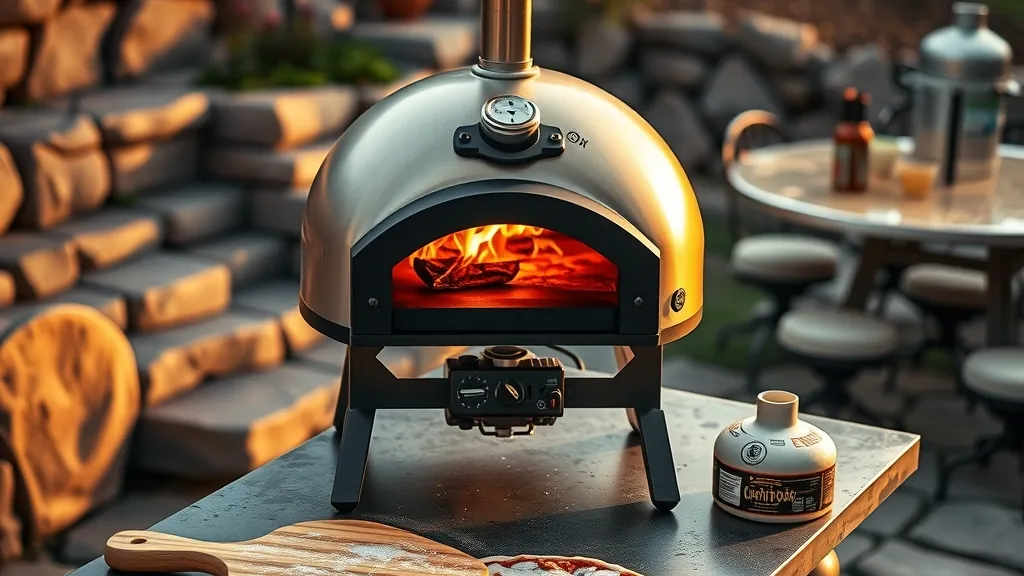
Most backyard pizza ovens ask for one of two things: a big chunk of your budget or a big chunk of your patio table. The Pi Prime is Solo Stove’s answer to both. It is a small stainless oven that runs on propane, weighs about 30 lb, and sells for less than most gas ovens that take a 16-inch pie.
My verdict: 4.1 out of 5. It’s a smart pick for a couple or small family who want pizza on a weeknight without managing a fire. It’s a frustrating pick if you cook for a crowd, because every pizza goes through the same 12-inch stone one at a time, and the heat sits toward the back of the oven.
How I put this together: I haven’t baked on a Pi Prime myself, and I won’t write as if I have. The specs and behavior below come from published reviews (Tom’s Guide, T3, The Kitchn, PureWow, Family Handyman and Top Ten Reviews) plus retailer listings I checked in early November 2026. Solo Stove’s own product page and warranty page blocked my automated fetch, so anything I couldn’t confirm there is marked. I searched for a recall and found none for the Pi Prime as of November 2026, but confirm on the CPSC recall site before you buy. Prices and terms change.
Where the Pi Prime fits
A pizza oven earns its place by being used. The first season, everybody is excited. By the third month, the oven that sees use is the one that’s easy to get going. A wood-fired oven asks for fuel, kindling and a tolerance for smoke. A heavy gas oven asks for a sturdy table and a second person to lift it. The Pi Prime lowers both barriers. It is a short steel cylinder, about 20.5 inches across and 15.5 inches tall, and it takes a propane tank and a regulator.
From my contracting years, I’d add this: an appliance people can lift alone is an appliance people put away properly. Stainless gets weather-spotted and pizza stones crack when they get left out in the rain. A 30 lb oven goes in the garage between uses. A 40-plus lb one tends to stay on the patio under a cover that blows off.
Specs and what’s rated vs. observed
| Spec | Pi Prime | Source |
|---|---|---|
| Fuel | Propane (listed by retailers as propane-fueled) | Best Buy, Top Ten Reviews |
| Cooking surface | Cordierite stone, about 132 sq in | PitLab, Best Buy |
| Pizza size | Sold as 13 in; 12 in in practice | Top Ten Reviews, PureWow |
| Max temperature | Up to 950°F (rated) | Top Ten Reviews |
| Weight | About 30 lb | Top Ten Reviews |
| Dimensions | About 20.5 in diameter, 15.5 in tall | Top Ten Reviews |
| Body | 304 stainless steel | Walmart listing |
| Price range | About $300 to $450 depending on retailer | Retailer listings, Nov 2026 |
| Warranty | “Lifetime” advertised by retailers; terms unverified | Costco listing |
The 950°F number is a rating. What matters for pizza is the stone temperature where the dough sits, and that varies across the oven.
The rear-heavy flame
T3 notes that most of the heat is ported toward the rear of the oven, and you end up turning the pizza more than you would in an oven with a wrap-around flame. That matches how a small gas oven of this design works: the burner sits behind the stone, so the back of the dough colors first.
Practically, that means a routine. Launch the pizza, wait for the back edge to set (usually 20 to 30 seconds in the reviews I read), turn a quarter, and repeat. Reviewers report a bake of about 90 seconds to two minutes at stone temperatures near 700 to 750°F. That’s quick. It also leaves very little room to look at your phone. An infrared thermometer is a better investment than a second peel.
PureWow’s reviewer also found the oven needed to run hotter than the company’s recommended 650°F for the bottom of the dough to cook through, closer to 800°F. That’s one tester’s experience, not a measured spec, but it’s worth checking the underside of your first pizza before you serve it.
Preheat: believe the stone, not the manual
Solo Stove advertises a roughly 15-minute preheat. Family Handyman says the company recommends a longer first burn-in of at least 30 minutes, after which about 15 minutes should do. The Kitchn waited about 30 minutes. Tom’s Guide suggests 20 to 30 minutes. Top Ten Reviews found it could be ready in as little as 15.
My take: budget 20 minutes on a mild evening and more when it’s cold or breezy. Wind matters more than the spec sheet suggests, because the flame sits in a small open-front chamber.
What it costs to run
The sticker price is the smaller story. A working setup looks like this:
- The oven: roughly $300 to $450 depending on the retailer. One retailer showed $449.99. A price tracker had $299.99 at Walmart and $329.99 at Amazon, but that data is from December 2024, so treat it as a floor. I couldn’t confirm Solo Stove’s own current price.
- A peel. Bundles with accessories exist, and Costco sells one. Buying the oven alone usually means buying a launching peel separately.
- A propane tank. A standard 20 lb tank is the usual choice, though I couldn’t find a credible hours-per-tank measurement, so keep a spare.
- A cover. Stainless outdoors needs one.
- An infrared thermometer for stone temperature.
A realistic out-the-door total is somewhere around $400 to $550, before propane.
Setup, placement and safety
Setup is the easy part: unfold the legs, seat the stone, connect the regulator and hose to the tank, and leak-check the connection with soapy water before lighting. Bubbles mean shut the valve and reseat the fitting.
Where you put it matters more than how you assemble it. Follow the manual’s clearances from walls, fences and anything combustible. Keep it off wood decking unless the manual allows it, and never use it in a garage, enclosed porch or under a low roof, because of fire and carbon monoxide risk. The shell and stone stay hot long after you shut off the gas, so keep kids and pets back and let it cool fully before moving or covering it. If you want a fixed natural gas line, that’s a licensed gas fitter’s job, and many towns require a permit. Don’t improvise it.
Upkeep
Gas ovens are low maintenance. After a cook, let it run a few minutes to burn off flour and spilled cheese, shut it off, and brush the stone once it’s cold. Never soak or soap a cordierite stone. Dark staining is normal. Disconnect the tank and store propane outdoors, never in the house or basement. If a stone cracks, replacement stones are a separate part, so look into availability and price before you buy rather than after.
The warranty fine print
Costco’s listing advertises a lifetime warranty, and another retailer says it covers manufacturing defects and excludes normal wear and misuse. That’s typical language, and it matters what “lifetime” means in practice. It usually covers defects, not a stone that cracks from thermal shock or paint and stainless that discolor from heat. I couldn’t load Solo Stove’s own terms, so I can’t tell you about registration requirements, proof-of-purchase rules, or whether it covers the stone. Read the current terms, save your receipt, and register the oven the day it arrives.
Who should buy it, and who shouldn’t
Buy it if you cook for one to three people, want a light gas oven, are comfortable turning a pizza every 20 seconds, and can find it near the low end of the price range.
Skip it if you routinely feed a crowd (one 12-inch pie at a time gets old), you want a wider pizza than 12 inches, you want wood flavor, or you’d be paying the top of the price range, where a larger gas oven starts to look better.
Check the model name on any listing. The older Pi, which could burn wood, is discontinued, and some retailer pages mix the two up.